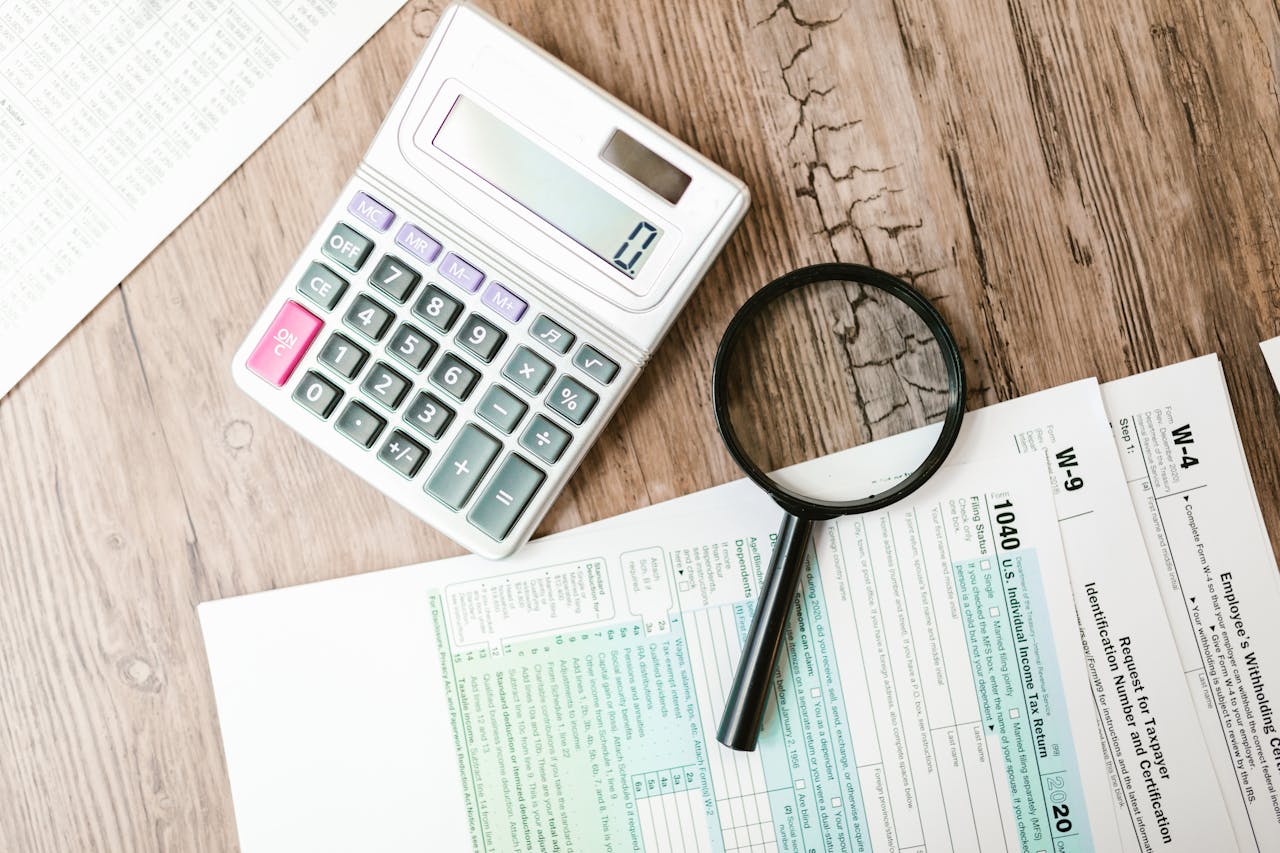
For the last few years, tax season for retirees was relatively boring. You took the standard deduction, ignored your shoe box of receipts, and filed quickly. But for the 2026 filing season (covering the 2025 tax year), the rules have changed significantly due to the “One Big Beautiful Bill Act” (OBBBA) and shifting economic conditions.
With the reinstatement of higher deductions and new “Senior Bonus” credits, the specific pieces of paper you need have changed. If you auto-pilot your return this year, you could miss out on thousands in write-offs. Before you head to your accountant or log into TurboTax, make sure you have hunted down these five often-overlooked documents.
1. Property Tax Bills (The “SALT” Receipt)
For years, the $10,000 cap on State and Local Taxes (SALT) made property tax bills irrelevant for many retirees in high-tax states. In 2026, that landscape has shifted. The new tax legislation has raised the SALT cap significantly (to $40,000 for many filers), bringing itemization back into play.
You need your Form 1098 from your mortgage lender (if you still have a loan) or the actual county tax receipts if you pay directly. Unlike previous years where this deduction was capped out early, your full property tax bill might now be deductible. If you have been shredding these bills thinking “I take the standard anyway,” you need to dig them out or download payment history from your county treasurer’s website immediately.
2. The QCD “Acknowledgment Letter”
If you are over 70½ and made a Qualified Charitable Distribution (QCD) directly from your IRA to a charity, you avoided paying taxes on that money. However, the IRS Form 1099-R you receive from your custodian does not clearly prove the money went to charity—it often just lists it as a “Normal Distribution” (Code 7), making it look fully taxable.
While a new “Code Y” was introduced for 2025, its use is optional for custodians this year. Therefore, the written acknowledgment letter from the charity (dated before you file) is your only bulletproof defense during an audit. You must physically hand this letter to your accountant to prove the $5,000 withdrawal shouldn’t be added to your taxable income. Without it, the IRS computer will default to taxing the full amount.
3. The “Senior Bonus” Income Worksheet
New for the 2025 tax year is the “Senior Bonus” deduction—an extra standard deduction boost for filers over age 65. However, this bonus is means-tested, meaning it vanishes if your income is too high.
You won’t receive a specific form for this, but you need to compile a provisional income worksheet that includes “invisible” income like tax-exempt municipal bond interest. The phase-out for this bonus begins at $75,000 (single) or $150,000 (joint). If you fail to calculate your Modified Adjusted Gross Income (MAGI) accurately by gathering all income sources, you might claim a bonus you aren’t entitled to, triggering an automatic IRS correction letter and a delayed refund.
4. Form 1099-K (The “Correction” Copy)
The IRS has officially reverted the 1099-K reporting threshold to $20,000 and 200 transactions for the 2025 tax year, retroactively killing the $600 rule that worried many casual sellers.
While most retirees won’t get a 1099-K for selling a used couch on eBay, some platforms may have sent them erroneously before the law was finalized. If you receive a 1099-K in the mail for a small amount (e.g., $800), do not ignore it. You must file a return that lists this income and then “zero it out” with a corresponding adjustment. If you just trash the erroneous form, the IRS automated underreporter system (AUR) will flag your return for missing income.
5. Form 1099-INT (The “High-Yield” Surprise)
In the era of 0.1% interest rates, bank interest was a rounding error. In 2025, with savings accounts paying 4% to 5%, your “safe” money generated a significant tax bill.
Watch for Form 1099-INT. A retiree with $100,000 in a High-Yield Savings Account earned roughly $4,500 in interest last year. That is fully taxable ordinary income. Many seniors overlook this form because they are used to earning $50 a year. Missing this form is the #1 reason for “Math Error” notices in 2026, as banks report this data directly to the IRS.
Don’t Rely on “Last Year’s” List
The tax code is a living document, and for 2026, it has grown new teeth. If you want to keep your refund, you need to prove every deduction with paper.
Did you receive an erroneous 1099-K this year? Leave a comment below—tell us how you fixed it!
You May Also Like…
- Internal Revenue Service Update: The Late-January Tax Move That Can Delay Your Refund by Weeks
- Senior Investors Are Reworking Tax Strategies After Market Volatility
- The “Itemizer Trap”: Why Seniors with Under $40,000 in State Taxes are Switching to the New ‘OBBBA Standard’
- Georgia Tax Alert: The ‘Side Hustle’ Audit That Is Already Costing Atlanta Residents Their Tax Refunds
- 10 Tax Breaks the IRS Hopes You Don’t Notice in 2026

Teri Monroe started her career in communications working for local government and nonprofits. Today, she is a freelance finance and lifestyle writer and small business owner. In her spare time, she loves golfing with her husband, taking her dog Milo on long walks, and playing pickleball with friends.
Read More


More investors are seeking control and tax benefits of ETFs. And the rising tide of…

When you think of the cost of living in California, you likely think of hefty…

Ah, spring is around the corner....and that means tax season is here as well.…

Connecticut's cost of living is relatively high compared to other states in the country. However,…

How much is an Olympic gold medal from Beijing, China worth? The gold medals aren’t pure…

For many older homeowners, property taxes are one of the biggest financial burdens in retirement.…
Comments