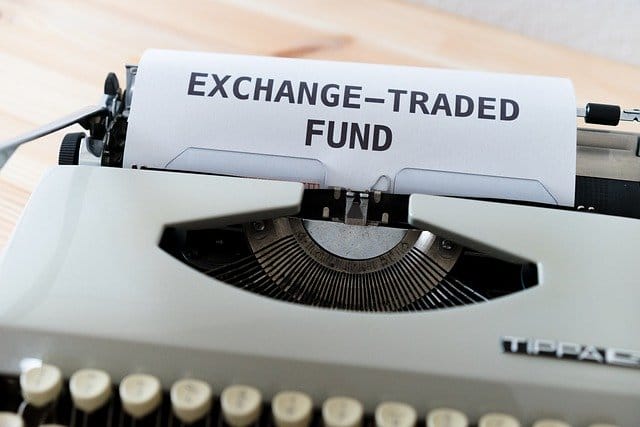
More investors are seeking control and tax benefits of ETFs. And the rising tide of money pouring into ETFs may soon become a tsunami. As a result, you may want to catch the wave.
ETFs have been a popular way to invest since their inception in the early 1990s. Today, there are over 7,600 ETFs bulging with trillions of investment dollars.
What Is an ETF
An ETF (Exchange-Traded Fund) is a security that tracks an index, commodity, bonds, a sector, or other assets. It owns the underlying assets and divides ownership of those assets into shares which investors buy.
A major difference between ETFs and mutual funds is that ETFs are traded on an exchange such as stocks. As a result, an ETF’s price may fluctuate throughout the trading day. Mutual funds, on the other hand, are traded once daily after markets are closed.
Low operating costs, resulting in no or low fees, have made ETFs popular. In addition, they offer diversification, because many ETFs invest in an index such as the S&P 500. However, some ETFs focus on a single industry, which limits diversification.
Flow Goes to ETFs
According to Morningstar, an investment research and management firm, in eight of the last 10 years, more investor money has gone into ETFs than mutual funds. In fact, over $900 billion has left mutual funds and $1.8 billion has gone into ETFs in that time.
ETFs function much like mutual funds in that they have investment portfolios. On the other hand, ETFs are more liquid and more easily traded than mutual funds.
The Tax Appeal
The popularity of ETFs is expected to mushroom in the years to come. That is due, at least in part, to wealthy investors seeking the control and tax benefits of ETFs.
President Joe Biden has proposed raising the top income tax rate for people making over $400,000 a year from 37 percent to 39.6 percent. In addition, he wants to tax long-term capital gains and qualified dividends at the ordinary income tax rate of 39.6 percent on income above $1 million.
The prospect of higher taxes has sent wealth investors looking for ways to earn high returns with low or no tax consequences. They have found ETFs.
Tax Benefits of ETFs
The way ETF shares are sold has the interest of wealthy investors. Here’s how it works.
If you own shares in a mutual fund and want out, the fund manager has to sell your shares on the open market. As a result, you may have to pay taxes on any profits.
With an ETF, you sell your shares directly to another investor. That way, neither you nor the fund has made a taxable transaction.
File Your Taxes with H&R Block

No Commissions
Well, you say, aren’t we happy for Richie Rich and his friends. But I’m not in the top tax bracket. Why would I be interested in ETFs?
Good question. You might like ETFs because most trade commission-free, have lower operating costs, and are more flexible. That’s the control part of the ‘control and tax benefits of ETFs’.
Mutual Funds Converting to ETFs
ETFs are becoming so popular, you may already be investing in one without taking any action. That’s because some mutual funds have converted to ETFs.
History was made in late March when two Guinness Atkinson Asset Management mutual funds were converted to ETFs. In addition, Dimensional Fund Advisors has announced six tax-managed funds will convert to ETFs. That will begin June 11, when four funds will make the transformation. More conversions are expected, according to Ben Johnson, Morningstar’s director of global ETF research.
“Many of the advantages of converting a mutual fund to an ETF are synonymous with the advantages of the ETF wrapper. It’s all about where these funds will ultimately land, the packaging, the form that they’ll ultimately take. And I would argue that chief amongst those is the relative tax efficiency of the ETF packaging versus a mutual fund packaging”, said Johnson in a recent Morningstar podcast. “They avoid unlocking capital gains distributions, which have become very frequent, and in some cases, very large in magnitude within the realm of open-ended mutual funds in recent years. That’s a big benefit that would arise from a mutual fund to ETF conversion.”
Tax Impact of Mutual Fund Conversion
Cashing out your mutual fund can trigger a tax bill. However, that is not the case in a mutual fund conversion says, Johnson.
“The conversation of a mutual fund to an ETF will not be a taxable event for mutual fund shareholders”, said Johnson. “Their basis will remain intact. What, ultimately, investors will enjoy is effectively a form of tax deferral that they wouldn’t otherwise benefit from if that fund were to remain a mutual fund, seen continued in some cases in persistent outflows, which in recent years have resulted in these large and regular capital gains distributions.”
Everybody in the Pool?
You might think all mutual funds would convert to ETFs considering the lower costs and tax benefits. However, some mutual funds just can’t do that.
Many mutual funds have several share classes distributed among multiple platforms. Those elements make conversion difficult. Still, other funds are in pension and other retirement programs. They can not convert to ETFs.
Bottom Line
So, are the heydays of mutual funds over? The heydays, yes, but they will not disappear. Retirement accounts such as 401(k)s and other retirement accounts will probably continue using mutual funds. After all, they are already tax-advantaged. In addition, recordkeeping is easier for managers.
However, for individual investors, the future points toward ETFs.
Read More
- Which Investments Should You Use First in Retirement?
- Inherited Stocks and How to Handle Them
- 3 Simple Steps to Follow When Planning Your Estate
If you enjoy reading our blog posts and would like to try your hand at blogging, we have good news for you; you can do exactly that on Saving Advice. Just click here to get started. Check out these helpful tools to help you save more. For investing advice, visit The Motley Fool.

Max K. Erkiletian began writing for newspapers while still in high school. He went on to become an award-winning journalist and co-founder of the print magazine Free Bird. He has written for a wide range of regional and national publications as well as many on-line publications. That has afforded him the opportunity to interview a variety of prominent figures from former Chairman of the Federal Reserve Bank Paul Volker to Blues musicians Muddy Waters and B. B. King. Max lives in Springfield, MO with his wife Karen and their cat – Pudge. He spends as much time as possible with his kids, grandchildren, and great-grandchildren.
Read More


Two things in life are certain: death and taxes. However, the American tax code…

When you think of the cost of living in California, you likely think of hefty…

Ah, spring is around the corner....and that means tax season is here as well.…

Connecticut's cost of living is relatively high compared to other states in the country. However,…

== As a military member, you put your life on the line to protect our…

How much is an Olympic gold medal from Beijing, China worth? The gold medals aren’t pure…
Comments