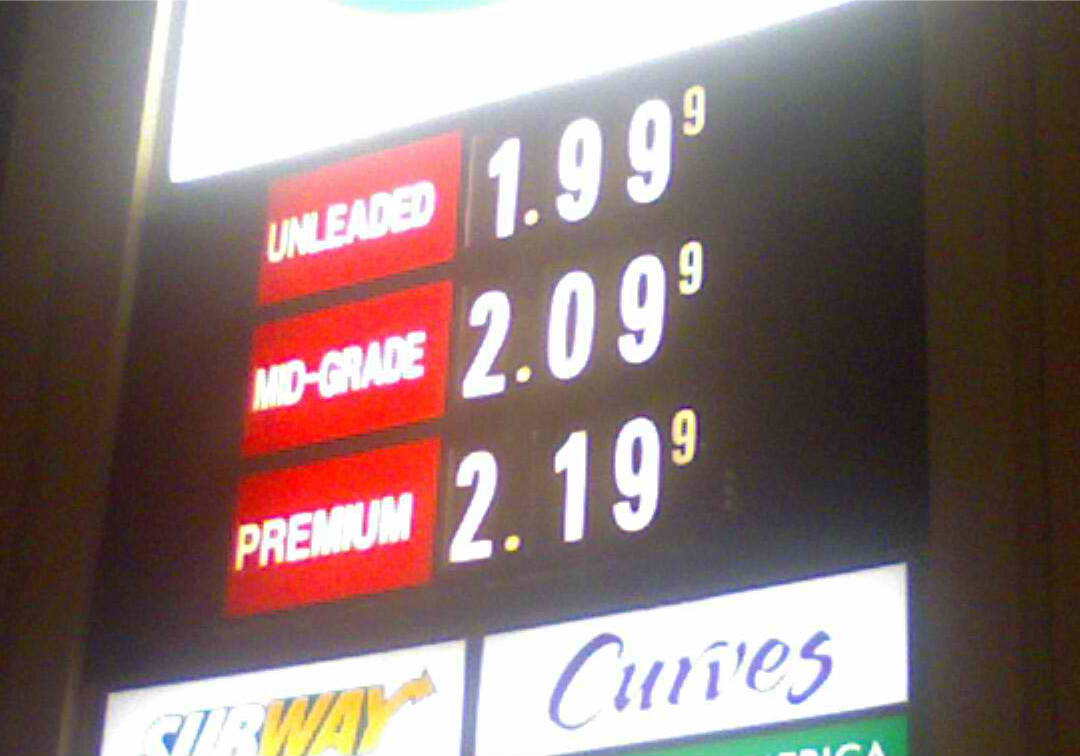
It wasn’t too long ago when gas prices were well above $3.00 a gallon, and in some places, more than $4.00 a gallon. That’s no longer the case, with a large oil glut which has significantly brought down the price of a barrel of oil (and as a result, gas prices) in the last six months. According to AAA, the average price of gas across the US at the beginning of 2015 is $2.23. It was more than $0.50 more a gallon a month ago (the average price then was $2.76 a gallon), and more than $1.00 a gallon more a year ago, when the average price was $3.33 a gallon.
The 52-week cheap gas challenge simply takes into account that you’re spending a lot less on gas today than you were in the recent past. You managed to survive paying a higher price for gas, so you should be able to continue to survive by paying that amount even today. The goal of this challenge is to take the difference between the two prices and use that to create yourself an emergency fund. It simply works like this.
Step One: Pick a price per gallon as your baseline. A good baseline for most people would be $3.00 a gallon, a price most people were paying just a few months ago. An even better baseline would be $4.00 a gallon. You can choose an amount which works best for you knowing the higher the amount, the better it will be for building your emergency fund. Whatever amount you choose for your baseline, that’s the amount that you will pay every time you put gas into your car.
Step Two: Whenever you go to fill up your car, be sure to note the number of gallons of gas you put into it. Also note the price you pay per gallon (or keep your receipt). The key for this challenge is to always try to buy the least expensive gas you can find in your area, because the lower the price you pay at the pump, the more money that will go toward your cheap gas challenge fund.
Step Three: Subtract the price that you paid at the gas station from your determined gas baseline, then multiply it by the number of gallons you put into your car each week. For example, if you have a baseline of $3.00 per gallon, and you paid $2.23 per gallon when you filled up your car, and it took 15 gallons of gas to fill up your car, the deposit you would make for the first week would be $11.55 ($3.00 – $2.23 = $0.77 x 15 = $11.55). All things staying the same, that would be over $600 put into your challenge account during the year. If your baseline was $4.00 a gallon, your challenge deposit would be $26.55, and all things staying the same, a deposit of over $1,380 at the end of the year. By simply keeping track of the number of gallons you put into your car each week and the price you paid for gas, you will have an easy way to put aside money each and every week of the year.
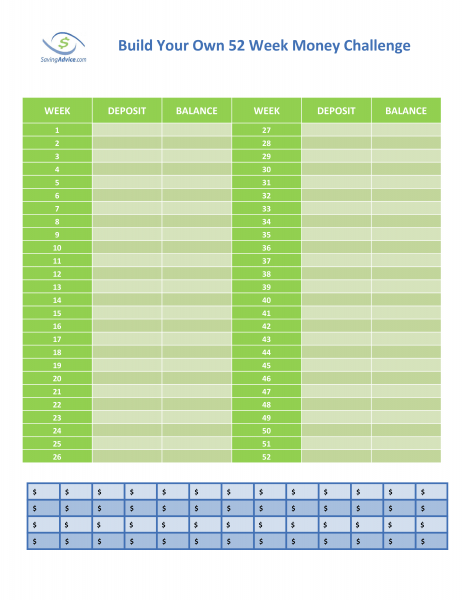
You can use this printable worksheet for your challenge (click on image to print pdf):

(Photo courtesy of Zepfanman)

Jeffrey strain is a freelance author, his work has appeared at The Street.com and seekingalpha.com. In addition to having authored thousands of articles, Jeffrey is a former resident of Japan, former owner of Savingadvice.com and a professional digital nomad.
Read More


If you're looking for a great way to start saving money right now that will…

Is 2022 your year of big savings? Do you want to set aside as much…

Gas prices, consumer spending on home remodeling, and travel are on the rise while GameStop…

People will tell you that if you want to save money on electricity, then you…

It's that time of year when people are looking to improve their finances as…
Comments