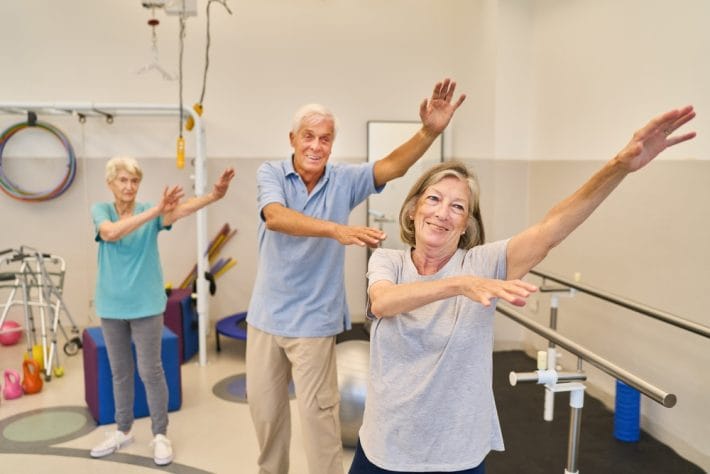
According to the Centers for Disease Control and Prevention, falls among adults 65 and older caused more than 38,000 deaths in 2021 and led to nearly 3 million emergency room visits. Even more concerning, many falls are preventable with simple strength and balance exercises done consistently at home. Physical therapists and senior fitness specialists say that balance is not just about standing on one foot. It also involves leg strength, coordination, posture, mobility, and reaction time. Here are five exercises you can try (if it’s safe) that could improve your balance and reduce your overall fall risk.
1. Heel-to-Toe Walking Helps Improve Coordination and Stability
One of the simplest balance exercises for seniors is heel-to-toe walking, sometimes called tandem walking. This movement involves walking in a straight line while placing the heel of one foot directly in front of the toes of the other foot. It can improve coordination, posture, and stability during movement, which is especially important because many falls happen while walking rather than standing still. Heel-to-toe walking is an important “dynamic balance” exercise that strengthens coordination and confidence during everyday movement.
If you’re new to this exercise, you can practice near a wall, countertop, or sturdy chair until you feel more comfortable maintaining balance independently.
2. Chair Stands Strengthen Legs and Improve Everyday Mobility
Chair stands are another highly recommended balance exercise for seniors because they strengthen the muscles most responsible for standing, walking, and climbing stairs safely. All you need to do is sit in a sturdy chair, lean slightly forward, stand up slowly, then sit back down with control. This exercise is also one way healthcare providers evaluate lower-body strength and fall risk in older adults. Weak leg muscles are strongly associated with increased fall risk because they make it harder to recover balance after stumbling or navigating uneven surfaces.
Many physical therapists encourage older adults to perform chair stands several times weekly because stronger legs often translate directly into safer daily movement and greater independence at home.
3. Standing Marches Improve Balance During Movement
Standing marches are becoming increasingly popular in senior fitness programs because they help improve balance while the body is actively moving. The exercise involves slowly lifting one knee at a time as if marching in place while maintaining an upright posture. Standing marches strengthen the hips, core, and stabilizing muscles needed for safe walking and quick balance recovery. Any exercise involving movement is especially important because most falls occur while transitioning, turning, or walking rather than standing completely still.
Seniors concerned about instability can perform standing marches while lightly holding onto a kitchen counter or sturdy chair for additional support.
4. Side Leg Raises Help Improve Hip Strength and Stability
Side leg raises are often overlooked, but they play an important role in improving balance and preventing falls. This exercise involves standing upright while slowly lifting one leg out to the side, then lowering it back down with control. Hip muscles help stabilize the body during walking, turning, and stepping over obstacles, which is why weakness in this area can contribute to falls. Side leg raises can be especially helpful because they strengthen muscles directly involved in maintaining side-to-side balance and preventing stumbles.
What’s great about this exercise is that anyone can do it. Older adults with limited mobility can often perform modified versions of side leg raises while holding onto a support surface safely.
5. Single-Leg Balance Practice Builds Confidence and Reaction Strength
Standing briefly on one foot remains one of the most recognized balance exercises for seniors, although experts stress that proper support and supervision are important for beginners. This movement helps improve proprioception, which refers to the body’s awareness of position and movement in space. Proprioception and reaction control are major factors tied to fall prevention and healthy aging.
Even practicing short single-leg stands for 10 to 20 seconds near a countertop can help strengthen stabilizing muscles and improve coordination over time.
Small Daily Movements Can Protect Long-Term Independence
Balance exercises for seniors are not simply about fitness or flexibility. Falls often create life-changing injuries, including hip fractures, head trauma, reduced independence, and long-term mobility problems. CDC resources show that one in four older adults experiences a fall each year, and many falls lead to hospitalization or permanent declines in quality of life.
But you aren’t helpless. Small daily movements, like chair stands, heel-to-toe walking, and standing marches, can help reduce your fall risk and protect your long-term independence. It’s worth making the change!
Have you tried any balance exercises recently, or do you have favorite routines that help you stay steady and active? Share your thoughts in the comments below.
What to Read Next
Medicare Warning: Falls Aren’t Fully Covered—4 Exercises That Could Help You Avoid Costly Injuries
3 Dangerous Exercises That Ruin Your Back After Age 60
The Best Low-Impact Exercises to Stretch and Strengthen After 70

Drew Blankenship is a seasoned personal finance and lifestyle writer with more than a decade of professional writing experience crafting clear, actionable advice that helps savers and investors over 40 protect their wealth and make smarter everyday decisions. His bylines appear regularly on SavingAdvice.com, CleverDude.com, and other respected outlets, where he draws on deep industry knowledge to deliver practical insights on cost control, smart spending, and long-term financial security.
Read More


When it comes to owning a home, sometimes it's hard to look past the initial…

Raising a pet doesn't have to break the bank. With savvy strategies and a bit…


While balancing your checkbook is not a difficult thing to do, the statistics say that…

With soaring inflation soaring and turbulent markets, it’s a good time to discuss an important concept: Risk…

Dear Dave, My husband and I want to do a live-in and flip real estate…

Written by Barbara Huson With inflation still soaring and markets still turbulent, it’s a good…
Comments