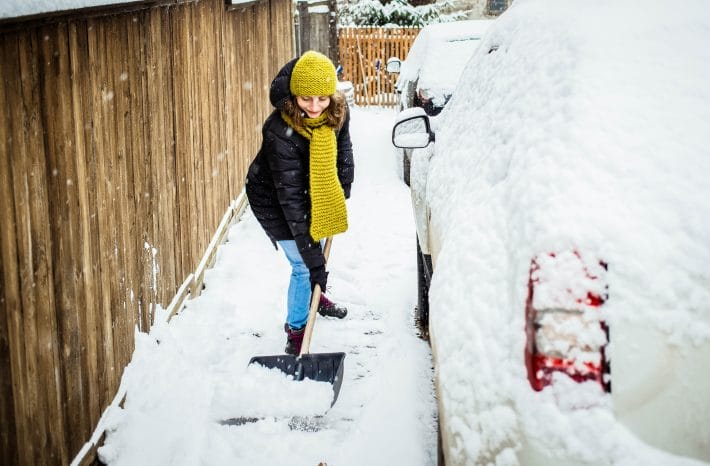
Many older New Yorkers assume the city provides senior snow removal assistance, but the truth is more complicated. While NYC requires property owners to clear their sidewalks within a tight deadline after every snowfall, the city does not offer an official snow‑shoveling service for seniors who can’t safely do the work themselves. Instead, help comes from a patchwork of nonprofits, volunteer groups, and neighborhood‑based programs that operate quietly behind the scenes.
For seniors living alone, those with mobility issues, or anyone worried about fines and icy sidewalks, understanding how these programs actually work can make winter far less stressful. Here’s a clear breakdown of the free help available—and what seniors need to know before the next storm hits.
Volunteer Networks Provide Most Senior Snow Removal Assistance
Most senior snow removal assistance in NYC comes from volunteer groups rather than city agencies. These programs match seniors with local volunteers who shovel sidewalks and steps after major storms.
Because they rely on community members, availability can vary widely by neighborhood and weather severity. Seniors often need to sign up in advance so coordinators can assign volunteers before the snow begins. While not guaranteed, these programs offer a lifeline for older adults who cannot shovel safely.
Local Nonprofits Run “Snow Angels” Programs in Select Neighborhoods
Several nonprofits operate “Snow Angels” programs that provide senior snow removal assistance during winter storms. These programs typically focus on seniors, people with disabilities, and low‑income households.
Volunteers are dispatched after snowfall to clear walkways, stoops, and building entrances. Some programs prioritize clients who have no nearby family or neighbors who can help. Because demand is high, seniors are encouraged to register early in the season to secure a spot.
Community Boards and Mutual Aid Groups Fill in the Gaps
Many community boards and mutual aid groups organize informal senior snow removal assistance efforts during heavy storms. These groups often use social media, neighborhood apps, or email lists to coordinate volunteers.
Seniors can request help directly, and volunteers respond as availability allows. While less structured than nonprofit programs, these groups often respond quickly because they are hyper‑local. Seniors who join their neighborhood mutual aid network may receive faster help during emergencies.
Some Senior Centers Maintain Volunteer Lists for Winter Support
Certain senior centers keep lists of volunteers willing to provide senior snow removal assistance to nearby older adults. These centers may not advertise the service widely, but they often help members who express concern about winter safety.
Volunteers typically live close by and can respond shortly after snowfall. Seniors may need to call their center directly to ask whether such support is available. This option works best for those who already participate in local senior programs.
Faith‑Based Organizations Often Step In During Major Storms
Churches, mosques, and synagogues frequently organize senior snow removal assistance for members and neighbors. These groups mobilize volunteers quickly, especially when storms are severe or prolonged.
Seniors do not always need to be members to receive help, depending on the organization’s outreach mission. Many faith‑based groups prioritize older adults who live alone or have medical conditions. Reaching out before winter begins can ensure seniors are added to the assistance list.
Some Programs Require Seniors to Meet Age or Income Criteria
Not all senior snow removal assistance programs are open to everyone. Many require seniors to be at least 60 or 65 years old, while others focus on low‑income households or those with disabilities.
Programs may ask for basic information to confirm eligibility, such as address, mobility limitations, or emergency contacts. These requirements help organizations prioritize those most at risk during winter storms. Seniors should review eligibility guidelines early to avoid delays when snow arrives.
Assistance Is Usually Limited to Sidewalks and Entryways
Most programs offering senior snow removal assistance focus on clearing sidewalks, front steps, and building entrances. Volunteers typically do not clear driveways, backyards, or private parking areas.
The goal is to ensure seniors meet NYC’s legal requirement to clear public walkways and prevent slip‑and‑fall accidents. Seniors should clarify what areas will be shoveled when signing up. Understanding these boundaries helps avoid misunderstandings during busy storm periods.
Seniors Must Register Early—Help Is Not Guaranteed During Every Storm
Because senior snow removal assistance relies heavily on volunteers, programs cannot guarantee service during every snowfall. Severe storms, volunteer shortages, or high demand can limit availability.
Seniors who register early and maintain communication with program coordinators are more likely to receive consistent help. It’s also wise to have a backup plan, such as a neighbor or family member who can step in when volunteers are overwhelmed. Early preparation ensures seniors aren’t left scrambling during dangerous weather.
Why Community‑Based Snow Help Matters More Than Ever
NYC’s reliance on volunteer‑driven senior snow removal assistance highlights how essential community networks have become for older adults. While the city enforces strict snow‑clearing rules, it does not provide direct shoveling services, leaving nonprofits and neighbors to fill the gap. Seniors who understand how these programs work—and who register before winter storms hit—can stay safer, avoid fines, and maintain independence. With the right preparation, winter doesn’t have to be a source of stress for older New Yorkers.
Have you or someone you know used a volunteer snow‑shoveling program in NYC? Share your experience in the comments.
What to Read Next
Aging‑in‑Place Upgrades Are Rising in New York. Here’s What Seniors Can Get Help Paying For
New York Retirees Are Seeing Big Changes to Senior Housing Waitlists
Don’t Wait 30 Days: How to Remove Squatters Legally in New York Before It’s Too Late
New Yorkers: 6 Ways the STAR Credit and Senior Exemptions Interact—And When They Don’t

Amanda Blankenship is Chief Editor at District Media, Inc., leading content strategy, quality assurance, and editorial operations across high-traffic personal finance sites like SavingAdvice.com and CleverDude.com. A Wingate University graduate with a BA in Communications (Journalism focus), she brings over a decade of experience in digital publishing, writing, and team leadership in the personal finance space.
Read More


Budgeting in retirement is a necessity, but not all budget hacks are created equal. Some…

If you’re on Medicare—or helping a parent or spouse manage their coverage—there’s a growing problem…

A car is a basic necessity in many ways, so it's important for you to…

For many older homeowners, property taxes are one of the biggest financial burdens in retirement.…

Retirement often comes with fixed incomes and rising expenses. For seniors, every dollar counts, and…

Thanks to modern medicine, people are living longer and more active lifestyles through their retirement…
Comments