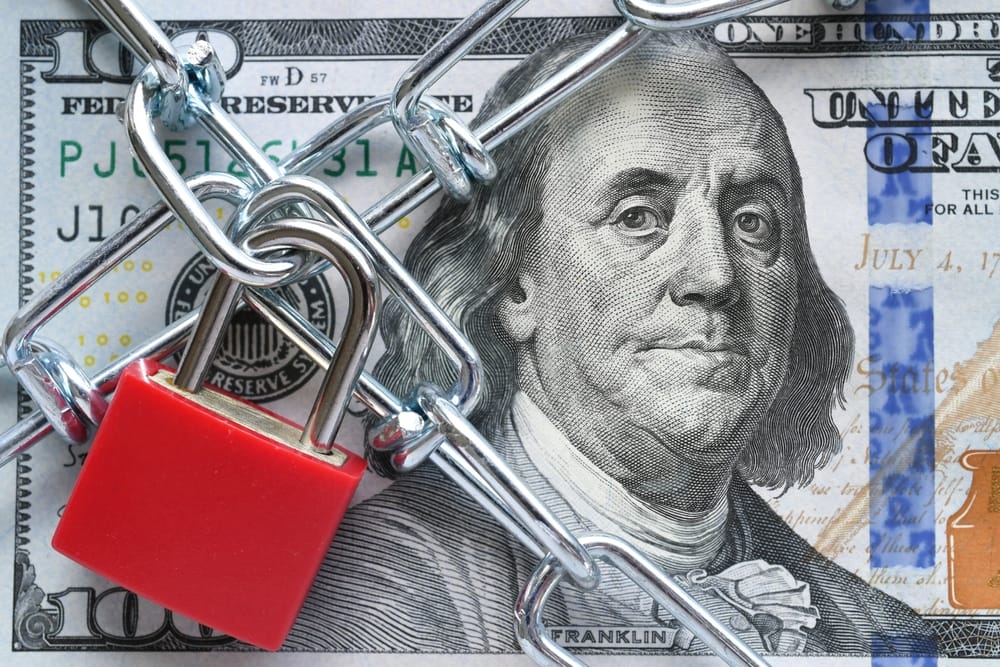
Imagine standing at the pharmacy counter to pick up a prescription, only to have your debit card declined. You check your balance—the money is there—but the account is locked. In 2026, this scenario is becoming increasingly common for seniors, not because they are out of money, but because they have triggered one of the banking industry’s new “protective” tripwires.
While banks are under immense pressure to stop the $3 billion annual wave of elder financial fraud, their aggressive new tools often cast too wide a net. From AI algorithms that misinterpret a grandkid’s birthday gift as a “money mule” transaction, to new federal rules that allow longer “investigative holds,” the friction between protection and access has never been higher. For a retiree living on a fixed income, a 10-day freeze isn’t an inconvenience; it is a crisis. Here are seven reasons why senior bank accounts are being frozen in record numbers this year.
1. The New “Speed Bump” Rule (FINRA 2166)
In January 2026, regulators introduced new tools to combat fraud, most notably the so-called “Speed Bump” rule (related to FINRA Rule 2166 proposals). This allows financial institutions to place a temporary hold of up to 5 business days on any transaction they suspect is fraudulent, regardless of the customer’s age.
For seniors, this often triggers during large, one-time transactions—like buying a car or helping a grandchild with tuition. Unlike the old system, where a phone call could clear it up, these new rules often require a formal internal review before the funds are released. If the bank’s “reasonable belief” of fraud persists, they can extend this hold significantly, leaving you without access to your cash for a week or more while they “investigate” your legitimate spending.
2. State-Mandated “Elder Hold” Laws
More than 30 states have now enacted or strengthened “Safe Harbor” laws that encourage banks to report suspected elder financial exploitation. These laws grant banks legal immunity if they freeze an account in “good faith” because they think a senior is being scammed or coerced.
While well-intentioned, these laws can be triggered by innocent family dynamics. If you withdraw cash to pay a contractor for a renovation and your teller thinks you look “nervous” or the amount seems uncharacteristic, they can unilaterally freeze the account and report you to Adult Protective Services. You then have to prove to a state agency that you are competent and that the contractor is legitimate before you can access your own money.
3. AI “Behavioral” False Positives
Banks have largely replaced simple rule-based fraud detection with AI behavioral modeling. These systems learn your “normal” life patterns—where you shop, what time you log in, and how fast you type.
The problem? Seniors’ lives change. If you suddenly start traveling, or if you develop a tremor that changes your typing cadence, or if you start using a VPN to watch foreign TV, the AI views this as a “behavioral anomaly.” It assumes your account has been taken over by a hacker and locks it down instantly. Because these freezes are algorithmic, customer service reps often cannot override them immediately, forcing you into a lengthy identity verification loop.
4. The “Voice Clone” Defense Freeze
With the rise of terrifyingly accurate AI voice cloning scams, banks are on high alert for “grandparent scams” where a senior rushes to wire money to a relative in “trouble.” If you attempt a wire transfer or a large P2P payment (Zelle/Venmo) to a new recipient, banks are now defaulting to a “guilty until proven innocent” stance.
If you insist on sending the money, the bank may freeze the account for your own good to prevent the transfer. They are terrified of liability if they let a scammer drain your life savings. While this protects many, it also freezes seniors who are genuinely trying to help family members in real emergencies, trapping the funds in a “protective” limbo.
5. The “Dormancy” Trap
Many seniors keep a “rainy day” savings account that they rarely touch. Automated systems are more aggressive about flagging these as “dormant” or “abandoned.” Crucially, automatic transactions (like interest deposits) do not count as “activity.”
If you haven’t physically logged in, called, or made a withdrawal in 12 to 24 months (depending on your state), the bank may freeze the account and prepare to send the funds to the state as unclaimed property (escheatment). Seniors often discover this when they finally go to use the emergency fund, only to find the account closed and the money gone to the state treasurer. You must initiate a “live” transaction once a year to keep the account heartbeat active.
6. Joint Account “Co-Owner” Liability
To help manage finances, many seniors add an adult child to their bank account as a joint owner. With consumer debt defaults rising, this creates a massive vulnerability. If your child gets divorced, sued, or falls behind on their own debts, creditors can freeze your joint account to satisfy their judgment.
Because the child is a legal owner, the entire balance is considered fair game. You might wake up to find your Social Security money frozen because your son defaulted on a car loan. The bank is legally required to honor the garnishment order, and untangling your money from your child’s debt can take months of legal battles.
7. KYC “Refresh” Lockouts
“Know Your Customer” (KYC) regulations are being strictly enforced in 2026. Banks are auditing older accounts that may have been opened decades ago with minimal documentation. If your file is missing a current photo ID or proof of address, the system may automatically place a “soft freeze” on the account until you update it.
This often happens without warning. You might receive a letter in the mail that looks like junk, ignore it, and then find your account locked 30 days later. For seniors with mobility issues who cannot easily get to a branch to scan a driver’s license, this bureaucratic hurdle can cut off access to funds for weeks.
Keep Your Account “Alive”
To avoid these freezes, you need to look like an active, predictable customer. Log in regularly, notify your bank before large purchases, and be extremely cautious about adding joint owners. In 2026, access to your money is not guaranteed; it is something you have to actively maintain.
Was your account frozen this year because of a “suspicious” transfer? Leave a comment below—tell us how long it took to unlock!
You May Also Like…
- 8 Affordable Banks and Credit Unions Where You Can Save More in 2026
- 6 Bank Safeguards That Accidentally Block Legitimate Transactions
- Bank Versus Credit Union — Which Will Serve Your Needs Better?
- IRS 2026 Crackdown: Why Your Bank Is Required to Flag Every Transfer Over $600 This Monday
- The “Liquidity Lockdown”: Why Major Banks are Rejecting Senior Out-of-State Wire Transfers This Week

Teri Monroe started her career in communications working for local government and nonprofits. Today, she is a freelance finance and lifestyle writer and small business owner. In her spare time, she loves golfing with her husband, taking her dog Milo on long walks, and playing pickleball with friends.
Comments