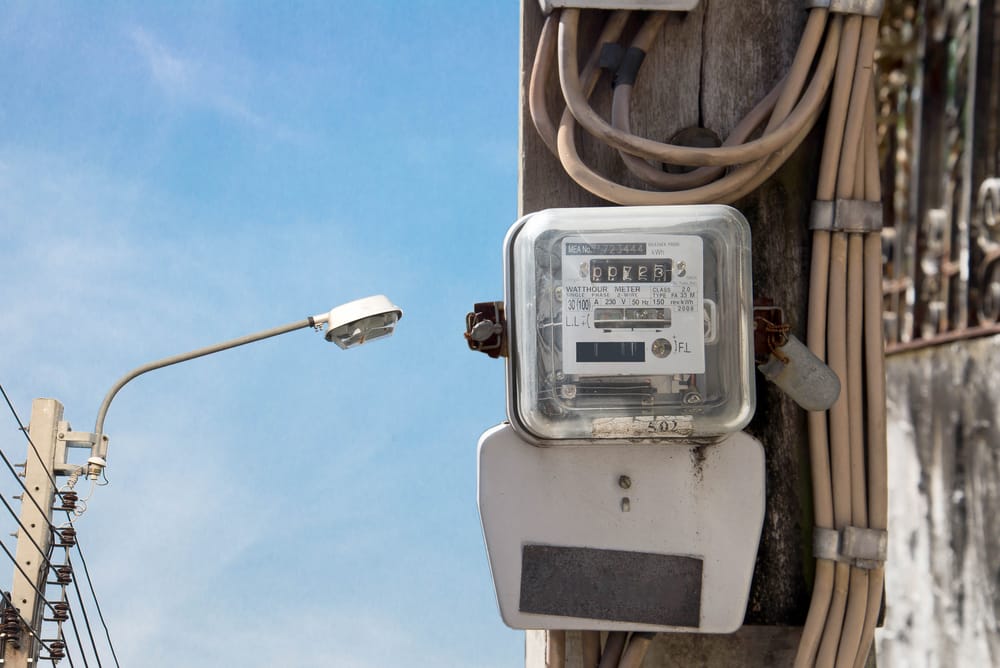
For decades, the relationship between a homeowner and the utility company was simple: a spinning metal disc on the side of your house measured how much you used, and you paid for that amount. If you used less, you paid less. In 2026, that linear relationship is breaking down. Utility companies across the country have largely completed the transition to digital “Smart Meters,” and they are now unlocking the software capabilities that come with them.
These new meters do far more than just count kilowatt-hours. They measure when you use energy, how fast you draw it, and even the “quality” of the power you return to the grid. This shift allows providers to alter the math of your monthly bill without technically raising the base rate per kilowatt. You might be using the exact same amount of electricity as you did in 2020, but the final dollar amount is higher because the calculation method has changed. Here are six specific ways your meter is changing the math on your monthly expenses.
1. The Introduction of Residential “Demand Charges”
Historically, only factories and large businesses paid “Demand Charges”—fees based on the maximum amount of power drawn at a single moment. Now, smart meters allow utilities to apply this to homes. Instead of just paying for the total electricity you consume, you are penalized for turning everything on at once.
If you come home at 6:00 PM, crank the AC, start the dryer, and plug in your EV all at the same time, your meter registers a massive “spike” in demand. Some 2026 rate plans now charge a fee based on that single highest 15-minute spike of the month. This means one bad afternoon of high usage can inflate your bill for the entire billing cycle, even if you are frugal the rest of the month. You now have to “stagger” your appliances to keep your demand curve flat.
2. The Shift to “Time-of-Use” (TOU) Defaults
Smart meters track usage in real-time, allowing utilities to charge different prices for different hours of the day. In many states, Time-of-Use rates have become the mandatory default. Power used between 4:00 PM and 9:00 PM (the “Peak” window) can cost three times as much as power used at midnight.
The meter is no longer a passive counter; it is a timekeeper. If you run your dishwasher right after dinner during the Peak window, you are paying a premium tax on that energy. To survive this calculation change, you must treat your appliances like they are on a schedule, shifting heavy loads to the “Off-Peak” morning hours.
3. The “Net Metering 3.0” Devaluation
For homeowners with solar panels, the smart meter is the gatekeeper of savings. Under old rules (Net Metering 1.0), the meter spun backward, crediting you retail price for every kilowatt you sent to the grid. Under new Net Billing tariffs rolling out in 2026, the smart meter tracks exports separately and credits them at a much lower “wholesale” rate.
This means the electricity you buy costs $0.30, but the electricity you sell is only worth $0.05. The meter splits these transactions instantly. This calculation change destroys the “bank” of credits many solar owners relied on for winter bills, forcing them to buy batteries to store their own power rather than selling it cheap.
4. Digital Water Meter “Sensitivity”
Old mechanical water meters relied on water flow to physically push a gear. At very low flows—like a dripping faucet or a running toilet—the gear often wouldn’t move, effectively giving you that wasted water for free. New ultrasonic or digital water meters have no moving parts and are incredibly sensitive.
They can detect a drip of one ounce per hour. While this is good for conservation, it means your bill will reflect 100% of your leaks, whereas the old meter might have missed the first 10%. Homeowners often see a 15% jump in water costs purely because the new meter is “too accurate” compared to the sluggish old one.
5. The “Connection Fee” Creep
Smart meters allow utilities to isolate the cost of being connected to the grid from the cost of power. Because solar and efficiency have lowered overall consumption, utilities are raising the fixed monthly connection fees to guarantee revenue.
Your bill might now show a $40 “Service Availability Charge” before you use a single electron. This changes the math of conservation. If half your bill is a fixed fee, turning off the lights saves you less money than it used to. The meter effectively guarantees the utility a paycheck regardless of your behavior.
6. Remote Disconnection Capabilities
In the past, if you were late on a bill, the utility had to send a truck to physically shut off your power. This cost them money, so they were often lenient. Smart meters have a remote disconnect switch.
The utility can cut your power with a mouse click from their headquarters instantly. This changes the “calculation” of risk for struggling families. There is no longer a buffer period while you wait for the truck; the lights just go out the moment the computer decides you are past due.
Watch Your Dashboard
The only way to fight these new calculations is to use the data against them. Log into your utility’s online dashboard to see your hourly usage. You can’t change the meter, but you can change your habits to dodge the peak charges.
Did your utility switch you to a Time-of-Use plan this year? Leave a comment below—tell us if your bill went up or down!
You May Also Like…
- Why More Cities Are Expanding Senior Utility Protections This Winter
- Why Utility Companies Offer Bill Credits Few Customers Ever Claim
- 5 Ways Winter Utility Bills Are Hitting Fixed Incomes
- The “Smart Meter” Audit: How New York is Using Your Utility Data to Prove You Aren’t Living in Florida
- The Analog Penalty: Why Your Utility Company is Charging You $75 a Month to Reject Their ‘Spy’ Meter

Teri Monroe started her career in communications working for local government and nonprofits. Today, she is a freelance finance and lifestyle writer and small business owner. In her spare time, she loves golfing with her husband, taking her dog Milo on long walks, and playing pickleball with friends.
Read More


You signed up for that streaming trial months ago and forgot to cancel. You’re still…

You may not notice it when checking your bank account once or twice a month,…

It’s easy to blame your soaring energy bill on weather, rates, or square footage, but…

If you are one of the thousands of New Yorkers who officially "moved" to Florida…

It's clear that it's going to be an expensive winter keeping your house warm. But…

If your monthly bills keep rising, you’re not alone. From groceries to streaming subscriptions, the…
Comments