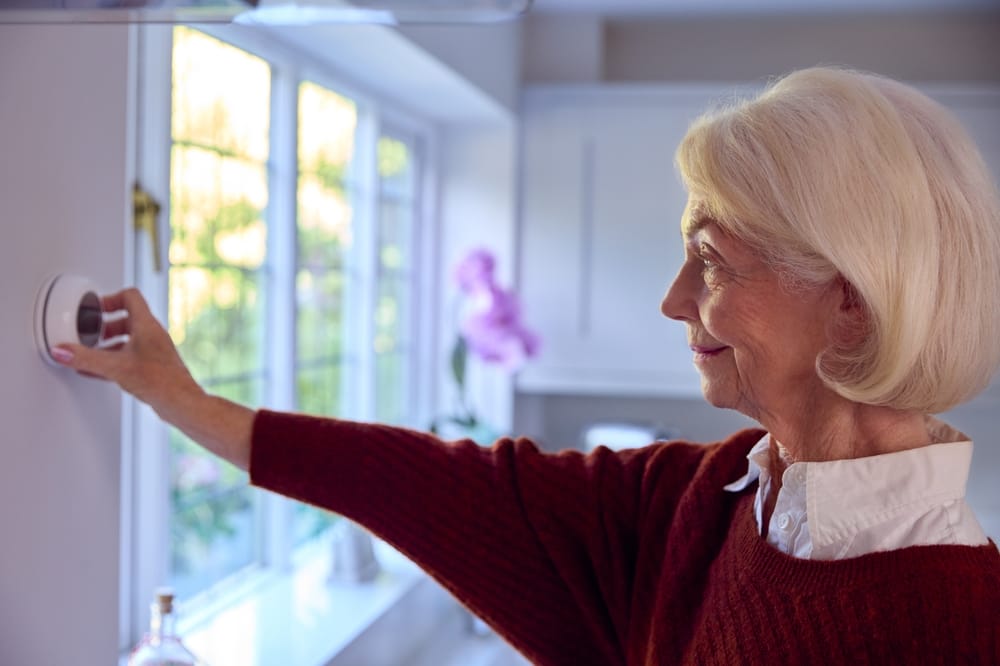
As we move through a particularly cold January 2026, many retirees are finding that their winter utility bills are higher than ever. With residential electricity prices now projected to hit 18 cents per kWh—continuing a trend of outpacing general inflation—the “energy burden” on those with a set monthly check is becoming a primary financial concern. Unlike other expenses you can easily cut, heating and cooling are necessities. However, fixed-income households across the country are proving resilient by adopting new strategies to keep the lights on without draining their savings. If you’re looking for ways to stabilize your monthly expenses, here are eight proven methods for managing rising energy costs this year.
1. Navigating the 2026 LIHEAP Funding Gaps
The Low-Income Home Energy Assistance Program (LIHEAP) remains the frontline defense for seniors, but 2026 has brought unique challenges. Due to recent federal budget delays, many states have seen pauses in their usual November funding release. To manage this, savvy households are applying as early as possible—often during “priority windows” in late autumn—to ensure they are at the front of the line when funds are disbursed. In states like Massachusetts, eligibility now extends to those making up to 60% of the state median income (roughly $51,777 for a single person), meaning more middle-class retirees may qualify than in previous years.
2. Leveraging the “Community Solar” Discount
One of the fastest-growing multigenerational living trends and solo-living strategies is subscribing to a community solar farm. This allows you to benefit from solar energy without installing panels on your roof—perfect for renters or those in shaded homes. Most programs now guarantee a 20% to 40% discount on the “supply” portion of your electric bill. Under new regulations, these credits can even be used by those in HUD-assisted housing without triggering a rent increase, making it a “no-risk” way to lower your monthly overhead.
3. Shifting to “Time-of-Use” (TOU) Schedules
Utility companies are increasingly moving toward TOU pricing, where electricity costs significantly more during “peak” hours (typically 4 PM to 9 PM). Fixed-income households are managing rising energy costs by shifting heavy appliance use—like dishwashers and laundry—to “off-peak” morning or late-night hours. By making this simple behavioral shift, some seniors are seeing a 20% reduction in their total delivery charges without spending a dime on home upgrades.
4. Utilizing “No-Cost” Energy Audits
In 2026, many major utilities like National Grid and ConEd are offering 100% subsidized Home Energy Assessments. These aren’t just “checkups”; they often include the free installation of LED bulbs, smart thermostats, and low-flow showerheads on the spot. If the audit finds your attic is under-insulated, you may qualify for 100% off the cost of new insulation and air sealing. For an aging house, these small seals can cut heating and cooling costs by up to 30%, providing an immediate “raise” to your monthly budget.
5. Exploiting the High-Efficiency Rebate Program
While some federal tax credits for “green” upgrades expired at the end of 2025, the High-Efficiency Electric Home Rebate Program is still going strong in 2026. This program provides point-of-sale rebates—not just tax credits—for low-to-middle-income families. You could receive up to $8,000 for a heat pump or $1,750 for a heat pump water heater. These devices are significantly more efficient than traditional furnaces, allowing you to heat your home using a fraction of the energy required by older systems.
6. The “Two-Degree” Psychological Reset
Sometimes the most effective way of managing rising energy costs is the simplest. The Department of Energy reports that adjusting your thermostat by just 2 to 3 degrees can lower your HVAC bills by 10%. More seniors are utilizing “smart” thermostats that automatically lower the temperature at night or when the house is empty. Pairing this with “zone heating”—using a high-efficiency space heater in the room you are currently using while keeping the rest of the house cooler—can save hundreds of dollars over a single winter.
7. Battling the “Vampire Load”
Modern homes are filled with “vampire” devices that suck power even when turned off, such as cable boxes, coffee makers, and standby TVs. In a year where every cent counts, fixed-income households are using advanced power strips (often provided free during energy audits) that completely cut power to peripherals when the main device is off. While it may only save $10 to $15 a month, that “found money” can cover the cost of a prescription or a few extra groceries.
8. Joining “Budget Billing” Plans
To avoid the “rollercoaster” of $400 winter bills followed by $100 spring bills, many are opting for Balanced Billing or Budget Plans. Your utility company averages your last 12 months of usage and charges you the exact same amount every month. This predictability is vital for managing rising energy costs on a fixed income, as it prevents a sudden cold snap from causing a late-payment fee or a bank overdraft.
Taking Control of Your Utility Future
Rising energy prices are a reality of 2026, but they don’t have to be a catastrophe. By combining government assistance with new technology like community solar and simple behavioral shifts, you can reclaim control over your monthly statement. The “cheapest kilowatt is the one you don’t use,” and in today’s economy, being an “energy-aware” consumer is one of the best ways to protect your retirement security.
Have you found a clever way to stay warm this winter without breaking the bank? Leave a comment below and share your energy-saving tips with our community.
You May Also Like…
- Utility Bill Restructuring Is Quietly Hitting Fixed-Income Households
- Utility Companies Are Adding “Infrastructure Fees” to Senior Bills This Winter
- 8 Discount Programs Seniors Can Use on Winter Utility Bills
- New Utility Meter Installations Are Causing Billing Errors for Seniors
- Nevada Homeowners Are Seeing New Utility Deposit Requirements

Teri Monroe started her career in communications working for local government and nonprofits. Today, she is a freelance finance and lifestyle writer and small business owner. In her spare time, she loves golfing with her husband, taking her dog Milo on long walks, and playing pickleball with friends.
Comments