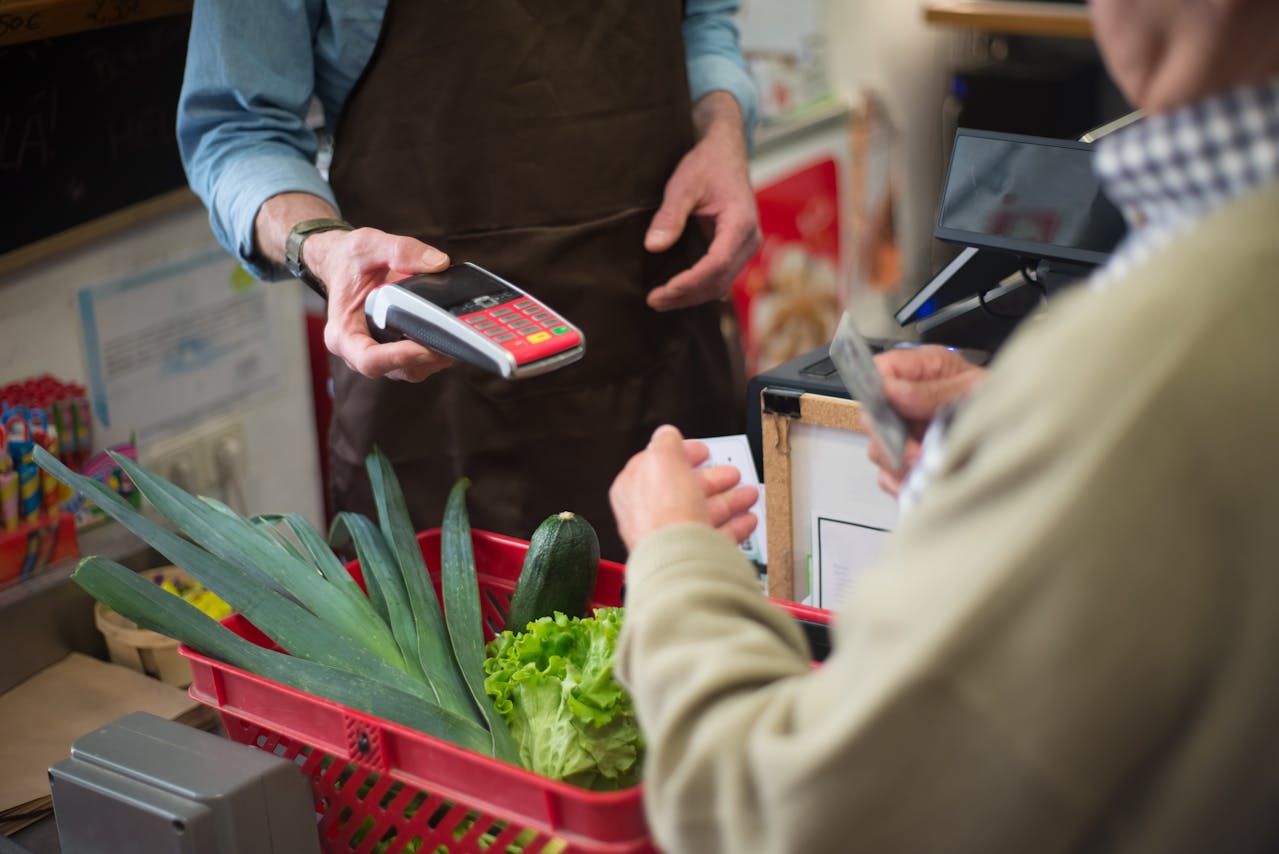
If you’ve found yourself reaching for a credit card more often at the supermarket checkout, you are part of a staggering national trend. As we enter 2026, the “grocery gap” has reached a breaking point for the American middle class, moving from a temporary inconvenience to a structural financial crisis. According to a recent Urban Institute analysis, 1 in 4 U.S. adults now pay for their groceries with a credit card and carry that balance forward, essentially taking out a high-interest loan just to put dinner on the table. This “food debt” is growing at an alarming rate, as the cumulative 24% increase in food prices since 2020 continues to outpace the modest wage growth seen in most sectors.
The Rising Cost of the 2026 Market Basket
The primary driver of this debt is the relentless climb of “at-home” food costs. While headline inflation has cooled from its 2022 peaks, the 2026 Food Price Report forecasts another 4% to 6% increase in grocery prices this year. For an average family of four, this means spending nearly $1,000 more on food in 2026 than they did just last year. Categories like beef, which hit record highs of over $6.20 per pound in late 2025, are showing no signs of slowing down due to the smallest U.S. cattle herd in decades.
The Interest Rate Trap: Paying More for Less
Using credit cards for perishables is a high-risk strategy in 2026 because of the current interest rate environment. With average credit card APRs exceeding 28%, carrying a grocery balance turns a $200 shopping trip into a $250 or $300 expense over time. This creates a “snowball effect” where families have less disposable income each month because they are still paying off last month’s milk and eggs. Experts warn that 2026 is potentially the worst year to rely on credit, as unpredictable interest rates and unstable employment markers make debt-servicing more burdensome than ever before.
Why Gen Z and Seniors Are Feeling the Most Heat
The move toward financing food is hitting opposite ends of the age spectrum most acutely. Gen Z consumers are reporting the highest rates of “financial fragility,” as they enter the workforce with record-high borrowing costs and limited savings. At the same time, seniors on fixed incomes are struggling with the loss of pandemic-era SNAP expansions and the 2026 reduction in many Medicare Advantage grocery benefits. For these groups, the credit card has transitioned from a tool for rewards to a “financial backstop” used to bridge the gap between their monthly income and the rising cost of eggs, dairy, and fresh produce.
The Decline of “Splurge” Spending
As food costs eat up a larger share of the household budget—now nearly one-third of pay for low-income families—consumer behavior is shifting toward “survival mode.” A McKinsey consumer sentiment update shows that “splurge intent” has declined sharply in early 2026 as shoppers focus on essentials. People are switching to store-brand items, buying in bulk, and utilizing “Buy Now, Pay Later” (BNPL) apps for large grocery runs. While these strategies help in the short term, they highlight a deeper issue: the “advertised price” of food is now only the baseline, with debt interest becoming a hidden ingredient in every meal.
Navigating the Food Debt Crisis
To escape the cycle of food debt, financial advisors are recommending a return to “cash-only” grocery shopping to force strict adherence to a budget. Utilizing digital coupons and “yellow-label” clearance items can save an average of 15% to 20% on a weekly shop, which can then be used to pay down the principal on high-interest cards. Additionally, many communities are launching “Food Pharmacies” and non-profit co-ops that offer direct-to-consumer pricing, bypassing the traditional retail markup. The goal for 2026 is to break the dependency on plastic before the interest payments become a permanent fixture of the grocery list.
The New Face of Food Insecurity
The fact that a quarter of the population is financing their nutrition on credit is a stark reminder that “stable” inflation does not mean affordable living. As we move through 2026, the relationship between the grocery aisle and the credit card statement will likely define the financial health of the American household. Until food prices stabilize relative to wages, the “invisible” crisis of food debt will continue to grow, requiring families to become more strategic and more vocal about the true cost of staying fed.
Are you currently putting groceries on your credit card to make ends meet, or have you found a way to beat the 2026 price hikes? Leave a comment below and share your best tips for saving money at the supermarket—your advice could help another family break the cycle of food debt.
You May Also Like…

Teri Monroe started her career in communications working for local government and nonprofits. Today, she is a freelance finance and lifestyle writer and small business owner. In her spare time, she loves golfing with her husband, taking her dog Milo on long walks, and playing pickleball with friends.
Read More


There are huge disadvantages of having no credit score. I actually know this better than…


It's one of the worst feelings you can ever have. That moment when you see…

Grocery Costs Keep Rising If you want to save on your food bill for the…

With more and more news stories of credit card theft, people begin to look for…

PayPal has been around for a long time. Therefore, many people think they know all…

When it comes to establishing a good credit score, using a credit card responsibly is…
Comments