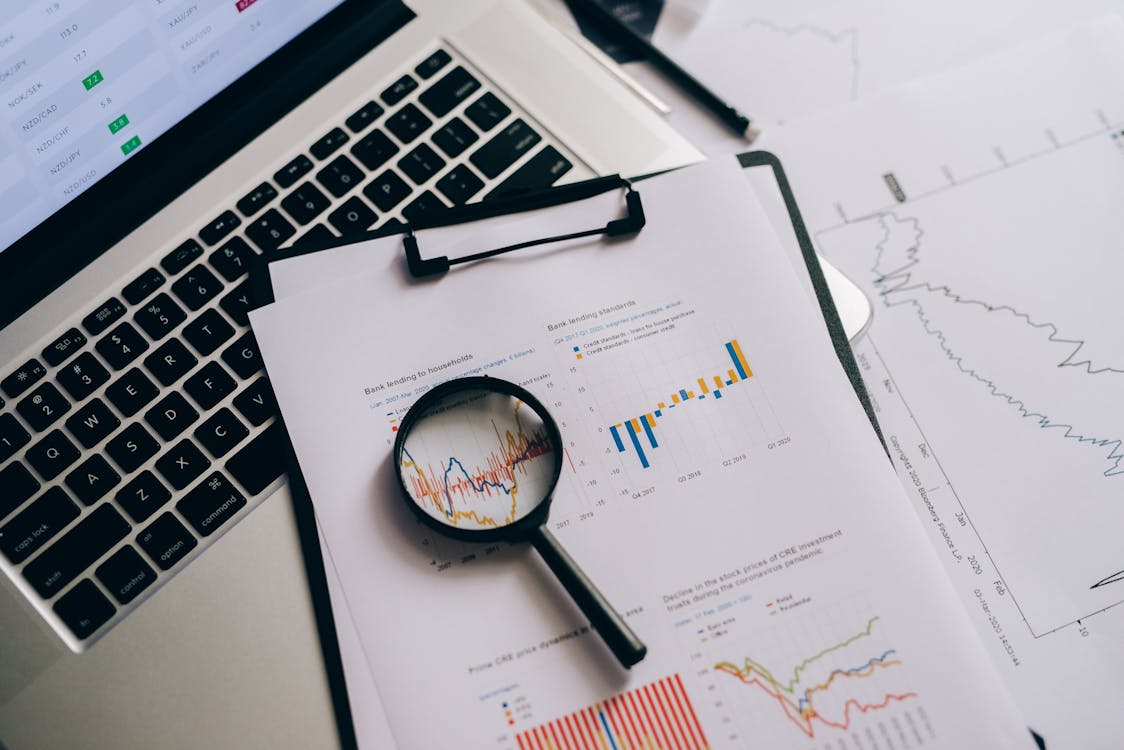
Nowadays, every small and large business analyzes and leverages data for various purposes. Big enterprises have more power and resources to analyze huge amounts of data, while small businesses have a limited data processing capacity. However, data analysis is equally significant to both large and small businesses.
Data serves as an essential asset for businesses and provides maximum and lucrative results when used properly. Integrating data into your B2B OR B2C organization can provide you with a competitive edge.
Significance of Data
All types of business data like internal, external, structural, and marketing can be mapped using data analytics tools and software. Modern business analytics tools and technologies further help plot and figure out the meaning of raw data sets before making crucial decisions. Nowadays, a company’s success greatly depends upon how well it utilizes its resources, especially data. A data-driven culture should be the top priority of all businesses to survive and grow in today’s competitive business world.
Since large amounts of data are challenging to sort and handle, companies need data analysts to process and make sense of it. Data analysts are undoubtedly in high demand in today’s tech-reliant era. It explains why most business enthusiasts are opting for this career pathway. If you’re willing to pursue a career in data analytics, consider an online business analytics degree to hone essential skills and kickstart your career. Online learning will allow you to seek employment alongside pursuing higher education.
All in all, there’s no denying that data can help businesses gain success by making data-driven and informed decisions. Below, we will discuss how data is crucial to business success.
Analyze business performance
Data can help track the past performance of a business. It also enables you to predict future performance by observing recent patterns. For large organizations with several departments, the performance data of each department can be analyzed to assess output and make changes where required. For example, a business can analyze the performance of the marketing and finance department to determine which one is not performing optimally. Then introduce changes for the success of the entire business.
Performance data provides a concise picture of how a business accomplishes routine activities and what can be changed to improve its performance. For example, you can track the sales of a subunit and take measures like modifying the marketing strategy or leveraging advanced systems to ensure higher sales in the future.
Understand customer behavior
Another crucial benefit of data is that it helps identify your target market’s stated and unstated needs by analyzing consumer behavior. It provides detailed insights into customer preferences, changing buying habits, and underlying wants.
Most organizations these days have a website and social media presence. Data analysis of consumer purchase habits, demographics, and web traffic assists companies in further understanding customer behavior. Businesses can utilize analytics tools to interpret consumer data and use the interpretations to boost efficiency.
Consumer data helps determine which products are performing well in the market and which are churning out less profit. Those products or services that fail to garner enough demand can be improved or eliminated based on whatever benefits business revenues.
Make informed decisions
The greatest benefit of having a data-driven business strategy is that it enables you to make calculated and informed decisions. Data-driven decisions offer low risks for organizations since they mostly stem from real-time or big data.
Businesses can use data to attract new customers, retain current customers, track social media interactions, predict sales trends, better manage marketing campaigns, and improve customer service. Data analysis also helps develop a customer value model to estimate the value of current customers in the long run based on their buying habits. As a result, you can direct your marketing campaigns toward your top buyers to gain maximum profits.
Evaluate the performance of promotional campaigns
All businesses strategize marketing campaigns. Promotional campaigns are essential for marketing your products or services to potential customers. Data can help measure the effectiveness of a marketing strategy, allowing you to scale or improve it.
Digital marketing methods provide real-time performance metrics and quickly help you analyze whether a strategy is working or not. Moreover, evaluating the effectiveness of a campaign allows you to alter it without wasting more resources. Marketing data evaluation allows businesses to focus on advertising campaigns generating lucrative leads.
Improves financial management
Financial management is a necessary part of running a business. Data helps understand where the finances of a business are going – monitoring cashflows. It helps assess where the business has invested and whether the investments are lucrative or not.
The financial team uses key performance indicators like working capital, operating cash flow, net income, operating expenses, and more to analyze the financial operations. Digital fraud has become prevalent today, but data analytics has empowered finance teams to identify fraudulent activities in company finances.
Financial data analytics can help manage costs and revenues and design solutions for financial problems.
Optimize business operations
Data helps improve business operations to reduce redundant costs and ensure more profits. Inefficient business operations result in wastage of resources and time and ultimately affect the success of a business.
Therefore, it is essential to utilize data to optimize business operations. You can visualize data to assess the performance of different operations and calculate their impact on other subunits. You can work towards optimizing specific business operations to increase return on investments. For example, organizations can optimize marketing operations by analyzing the performance of different marketing campaigns and investing in the marketing campaigns or channels deriving the highest returns.
Conclusion
Data generated by businesses can provide valuable insights crucial for a business’s success. Businesses need data analysts to make sense of the enormous amount of data they generate. Data analysts visualize and arrange the data into insightful information, enabling businesses to measure their performance and devise future growth strategies.
Small and large-scale businesses can leverage data to optimize their operations, improve their financial management, and evaluate the performance of their marketing campaigns. Likewise, they can make data-driven and calculated decisions, determine customer behavior, and understand the overall business performance by utilizing real-time and big data. Besides, to survive in today’s tech-dependent era, every organization must focus on leveraging data, whether for a single business unit or all departments.
Read More


In the ever-evolving landscape of the food industry, entrepreneurs are constantly seeking innovative ways to…

The pandemic has shown us all that life can change in the blink of an…

Are you thinking about hiring your child as an employee to your business? Perhaps you…

For many people, timeshare resort units are a huge waste of money. Here are 10…

In our world of electronic gadgetry, the old-fashioned jigsaw puzzle gets short shrift. It's not…

We are almost hardwired to pursue ever increasing pay levels. Each job should, ideally, give…
Comments