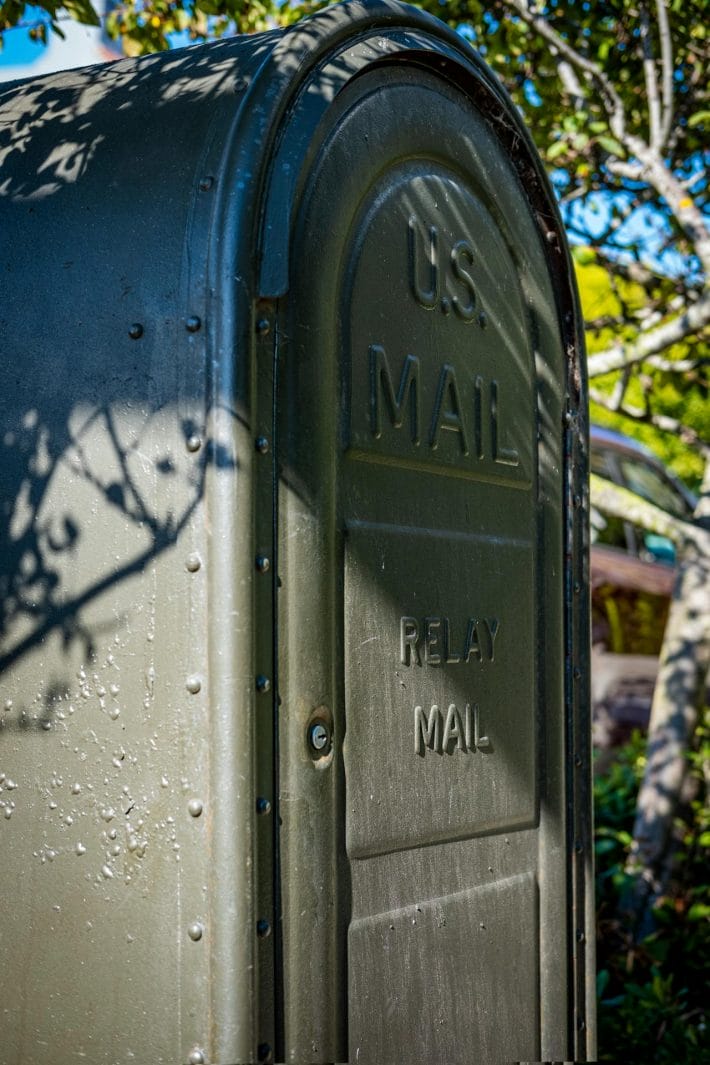
The simple act of mailing a check to pay a utility bill has become one of the most dangerous financial behaviors for seniors in 2026. Criminal rings have industrialized the theft of mail, targeting the blue USPS collection boxes with stolen “arrow keys” that open every box in a zip code. Once they steal your check, they don’t just cash it; they “wash” it with chemicals to erase the ink, rewrite the payee to themselves, and change the amount from $50 to $5,000. Because seniors are the demographic most likely to still use paper checks, they are the primary victims of this surging crime. Here are eight ways this fraud happens and how to protect your account.
1. The “Blue Box” Fishing
Criminals are no longer fishing individual letters out of boxes with sticky traps; they are opening the entire box with stolen keys. In 2026, mailing a check in a street-side Blue Box—especially on a Sunday or holiday—is statistically risky. If the box isn’t emptied for 24 hours, it is a sitting duck for thieves who raid it overnight. The safest place to mail a check is inside the post office lobby, sliding it into the slot in the wall. Never leave mail in your personal curbside mailbox with the red flag up; that is a beacon for thieves.
2. The “Chemical Wash” Technique
Thieves use common household solvents (like nail polish remover) to dissolve the ballpoint ink on your check while leaving the pre-printed lines intact. They then rewrite the check to a “mule” (a person paid to cash it) and increase the dollar amount significantly. In 2026, the best defense against this—other than not writing checks—is using a black gel pen (like the Uni-ball 207). The gel ink permeates the paper fibers and cannot be washed away by solvents, ruining the thief’s attempt.
3. The “Whitewashed” Payee
Sometimes thieves don’t change the amount; they just change the “Pay to the Order Of” line. You might write a check to “IRS” or “Verizon,” and the thief alters it to their own name. When you look at your bank statement, you see the check cleared for the correct amount, so you assume it was paid. You only realize the fraud months later when the IRS sends a notice that you never paid your taxes. You must view the scanned image of every cleared check online to verify the payee name hasn’t been altered.
4. The “Copied” Template
Once a thief has one of your checks, they have your routing number, account number, name, and address. In 2026, sophisticated rings use this data to print dozens of counterfeit checks using your information. They don’t even need to wash the original; they just clone it and go on a shopping spree at big-box stores. This is why a single stolen check can lead to your entire account being drained weeks later. Closing the account is often the only way to stop the bleeding.
5. The “Dark Web” Sale
Your stolen check is often not cashed by the thief who stole it; it is photographed and sold on the dark web or encrypted messaging apps like Telegram. “Walkers” (people willing to walk into a bank) buy the image, print it, and cash it in a different state. This separates the theft from the cash-out, making it harder for police to track. Your check might be stolen in Ohio and cashed in Florida three days later.
6. The “Positive Pay” Gap
Businesses use “Positive Pay” to tell their bank exactly which checks they wrote, so the bank rejects any that don’t match. Unfortunately, few banks offer this service to personal consumer accounts in 2026. However, some credit unions and banks have introduced “Check Monitoring” alerts. You can set an alert to notify you via text the moment a check clears. If you get a text for a $2,000 check you didn’t write, you can call the fraud department instantly to reverse it. Speed is your only advantage.
7. The “Statement” Lag
Seniors who rely on paper statements often don’t see the fraud for 30 days. By then, the money is gone, and the “return window” for the bank to claw it back from the thief’s bank has closed. Under the UCC (Uniform Commercial Code), you have a limited time to report errors. Banks are increasingly denying claims that are reported late, arguing that the customer failed to exercise “reasonable care.” Checking your account online weekly is mandatory in this environment.
8. The “Bill Pay” Solution
The safest way to send a “check” is to use your bank’s online Bill Pay feature. When you do this, the bank often sends the money electronically (ACH), or if they must send a paper check, they print it themselves and mail it. If that check is stolen, it is the bank’s check, not yours, and your account number is usually masked. It shifts the liability and the hassle away from you.
Stop Writing Checks
The hard truth is that the paper check is an obsolete, insecure payment method in 2026. Transitioning to online bill pay or automatic deduction is the only way to be 100% safe from check washing.
Do you still use a blue mailbox? Leave a comment below—tell us if you’ll switch to the lobby slot!
You May Also Like…
- 6 Banking Changes That Make Autopay Riskier
- 7 Banking Policies That Make Emergency Withdrawals Harder in 2026
- The “AI-Voice” Safe Word: Why Your Family Needs a 4-Digit Code to Block 2026 Medicare Scams
- 10 New Text Message Scams That Look 100% Real
- 6 Investment Scams Making a Comeback Across the U.S.

Teri Monroe started her career in communications working for local government and nonprofits. Today, she is a freelance finance and lifestyle writer and small business owner. In her spare time, she loves golfing with her husband, taking her dog Milo on long walks, and playing pickleball with friends.
Read More


Budgeting in retirement is a necessity, but not all budget hacks are created equal. Some…

For many older homeowners, property taxes are one of the biggest financial burdens in retirement.…

Retirement often comes with fixed incomes and rising expenses. For seniors, every dollar counts, and…

Thanks to modern medicine, people are living longer and more active lifestyles through their retirement…

Every senior’s dream is to live out their latter years in style. In the spirit…

Many retirees are drawn to condominium living for the convenience, lower maintenance, and the sense…
Comments