When we buy a home or a car, we tend to think of the maintenance as a flat line—a steady drip of oil changes and lawn mowing. In reality, ownership responsibility follows an exponential curve. As your asset ages, it doesn’t just get older; it crosses specific “risk thresholds” that trigger entirely new categories of expense and liability.
In 2026, this curve has steepened. Insurance companies have become ruthless about “aging out” homes that were built as recently as the early 2000s, categorizing them as high-risk assets requiring aggressive oversight. Meanwhile, the “smart” technology we installed a decade ago is turning into a security liability. The home you bought ten years ago was an asset you maintained; the home you own today is a system you must defend. Here are six ownership responsibilities that expand significantly as your property clock ticks forward.
1. The “Four-Point” Insurance Mandate
For the first 15 years of a home’s life, obtaining insurance is automatic. You pay the premium, they cover the house. But once a home crosses the 20-year mark—meaning homes built in 2006 are now on the list—insurers are increasingly demanding a mandatory 4-Point Inspection before renewing coverage.
This is not a formality. They are aggressively looking for reasons to drop coverage on roofs, electrical panels, plumbing, and HVAC systems. If your roof has 3 years of life left, they may demand you replace it now or lose your policy. What used to be a “recommended repair” is now a condition of coverage. As your home ages, you are no longer the customer; you are the applicant, forced to re-qualify for your own protection every few years.
2. The “Lateral Line” Liability
Most homeowners assume the city is responsible for the sewer pipes. This is only true for the main line in the street. You are responsible for the “lateral line”—the pipe that runs from your toilet to the street connection. These pipes have a lifespan of roughly 30 to 50 years.
If your home was built in the 1980s or 90s, your lateral line is entering the danger zone. In 2026, cities are using sensors to detect leakage, and if your line is leaking sewage into the groundwater, they can force you to repair it. This is a $10,000 to $20,000 excavation job that is rarely covered by standard homeowners insurance. As the pipe ages, your invisible liability grows by the day.
3. The “Digital Decay” of Smart Homes
Ten years ago, “smart homes” were the future. Today, that first generation of smart thermostats, doorbells, and hubs is reaching “End of Life” (EOL) status. Unlike a dumb lock that works for 50 years, a smart lock stops receiving security updates after 5 to 7 years.
Owning a “mature” smart home means managing digital obsolescence. You are responsible for replacing working hardware simply because the software is no longer supported, creating a security risk for hackers. The cost of maintaining a smart home isn’t just electricity; it is the amortized replacement cost of the entire system every decade.
4. The “Simultaneous Failure” Cliff
In a new home, systems fail sequentially—a faucet here, a switch there. But in a home aged 15 to 20 years, systems tend to fail simultaneously because they were all installed on the same day.
The furnace, the water heater, and the AC unit often have identical lifespans. If you own a home built during the mid-2000s boom, you are approaching the “Simultaneous Failure Cliff” where $25,000 worth of mechanical systems expire within an 18-month window. This isn’t bad luck; it is statistical inevitability. Your responsibility shifts from “repair” to “capital expenditure planning” to avoid bankruptcy.
5. Mature Tree Liability
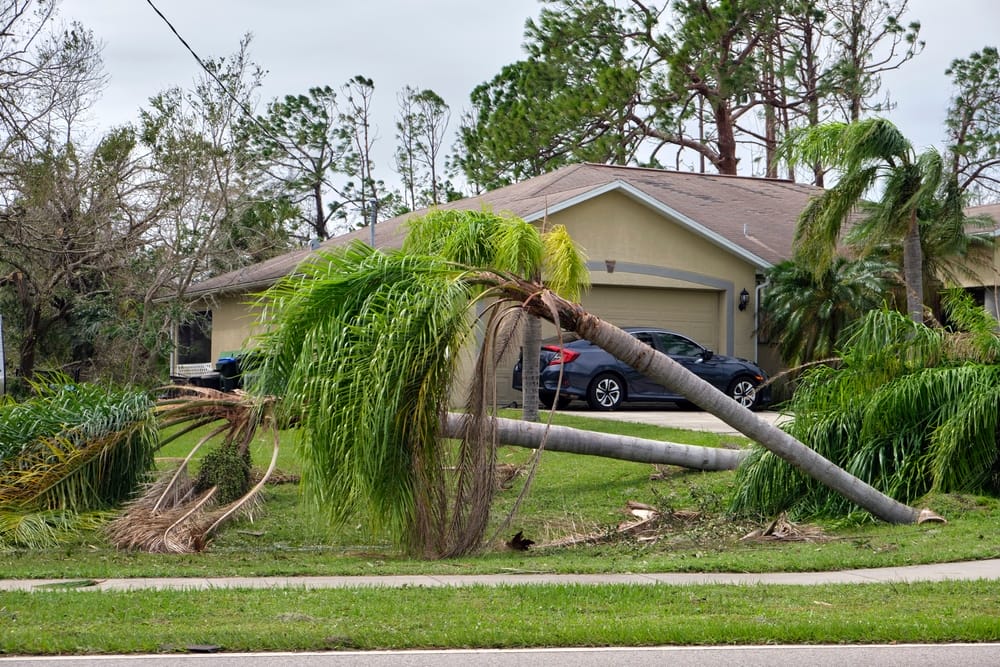
A sapling planted in the front yard is a decoration. That same tree, 30 years later, is a legal liability. As trees mature, their roots invade neighbor’s pipes, and their limbs overhang power lines and roofs.
In 2026, insurers are using aerial imagery to identify “overhang” risks. If your mature oak tree falls on your neighbor’s car, you could be liable if it was deemed “dead or diseased” and you ignored it. The cost of ownership now includes annual arborist inspections and expensive trimming, costs that did not exist when the tree was young.
6. The “Code Drift” Gap
Building codes change every three years. A house built in 2000 was perfectly safe then, but by 2026 standards, it is electrically deficient. It likely lacks GFCI outlets in the garage, AFCI breakers in the bedrooms, and neutral wires for smart switches.
While you don’t have to upgrade just to live there, this “Code Drift” becomes a massive financial hurdle when you try to sell or renovate. A simple kitchen remodel can trigger a requirement to update the entire house’s electrical panel to meet 2026 code. The older the home, the wider the gap, and the more expensive the “heavy up” becomes.
Monitor Your Assets
Ownership is not static. The house that was cheap to keep in 2016 is expensive to keep in 2026 not just because of inflation, but because it has physically crossed into a new phase of its lifecycle.
Did your insurance company demand a roof inspection this year? Leave a comment below—share your experience!
You May Also Like…
- Home-Safety Grant Removed: Owners 55+ No Longer Qualify for Free Retrofit Program — Without Any Announcement
- 8 Ways to Prepare for Mid-Winter Home Repairs on a Tight Retirement Budget
- Home-Warranty Fine-Print: Why Reviews for 55+ Owners Are Dropping — and What’s Being Omitted
- The 16% Homeowner Trap: Why Major Insurers are Quietly Canceling 2026 Policies This Week
- 7 Free Home Safety Programs That Reduce Long-Term Costs

Teri Monroe started her career in communications working for local government and nonprofits. Today, she is a freelance finance and lifestyle writer and small business owner. In her spare time, she loves golfing with her husband, taking her dog Milo on long walks, and playing pickleball with friends.
Read More


Millennials Making Monster Market American adults between 30 and 50 years of age will push…

The envelope budgeting system is one of the best-known ways for people to budget. It's…

About 10 years ago, a woman I know gave up a high-paying job in Connecticut…

For many people, the idea of opening a Starbucks franchise is incredibly appealing. The chain…

Feeling overwhelmed by financial obligations? You aren't alone, many people feel the enormous weight of…

Electric vehicles (EVs) are marketed as the future of driving—cheaper to fuel, better for the…
Comments