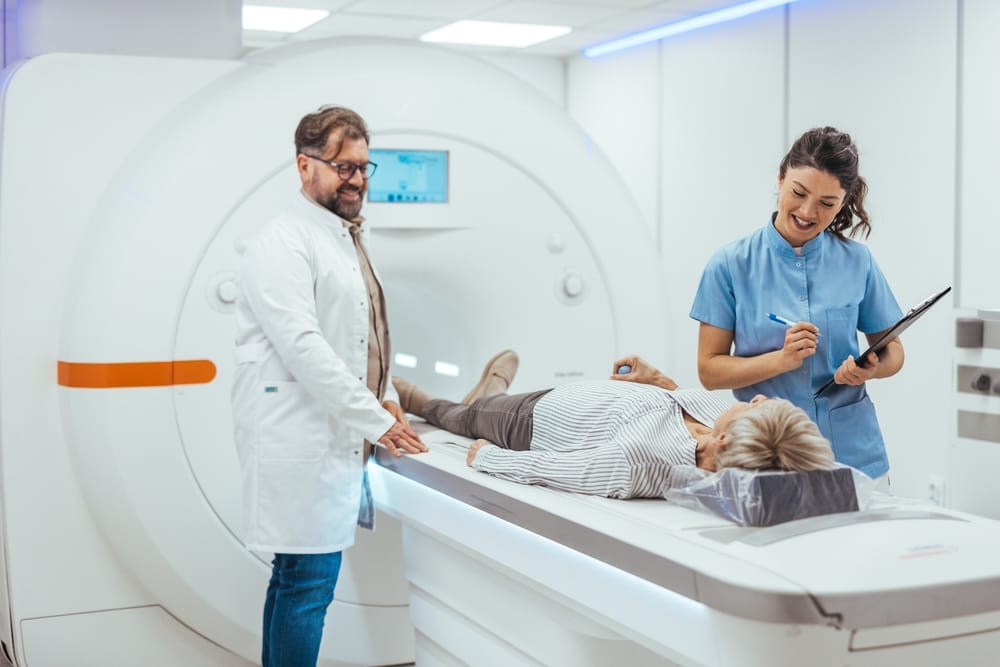
You might assume that the price of a medical procedure is determined by what is done to you. In 2026, the price is largely determined by the building you are standing in when it happens. A knee injection performed in an independent doctor’s office might cost $150. The exact same injection, performed by the same doctor but in a building owned by a hospital system, can cost $800.
This price discrepancy is known as the “Site-of-Service Differential.” It is one of the most aggressive revenue drivers for hospitals this year. As health systems aggressively buy up independent practices, they reclassify them as “Hospital Outpatient Departments” (HOPDs). This allows them to tack on a “Facility Fee” to your bill that never existed before. You receive the same care in the same room, but you pay three to four times more. Here is how this location-based pricing is inflating your medical bills in 2026.
The “Provider-Based” Billing Trap
The core of the problem is a regulatory classification called “Provider-Based Billing.” When a hospital buys a dermatology clinic or a cardiology practice, they often change its status to a department of the hospital.
The Impact: You walk into a building that looks like a regular doctor’s office. It might be miles away from the main hospital campus. However, because it is now “provider-based,” they can bill Medicare and private insurers using hospital rates. You will receive two charges: one for the physician (Professional Fee) and a separate, often larger, charge for the “room” (Facility Fee).
The 2026 “Site Neutral” Battle
Medicare has been trying to fix this. In 2026, the Centers for Medicare & Medicaid Services (CMS) finally implemented a new Site Neutral Policy for drug administration. This rule cuts payments for things like chemotherapy injections at “grandfathered” off-campus clinics to match the lower rates paid to independent doctors.
The Loophole: This 2026 fix is narrow. It applies primarily to drug administration. It does not fully apply to many other services like expensive imaging, minor surgeries, or standard checkups in all settings. Hospitals are still legally allowed to charge higher facility rates for thousands of other procedures in off-campus buildings that meet specific exceptions.
The IPO List Phase-Out
For years, the “Inpatient Only” (IPO) list dictated that certain risky surgeries had to be done in a hospital. Starting in 2026, CMS is phasing out this list over three years, removing nearly 300 musculoskeletal procedures immediately.
The Trap: This sounds good—it means you can have surgery in a cheaper outpatient setting. However, hospitals are rushing to move these surgeries to their own HOPDs rather than cheaper Ambulatory Surgery Centers (ASCs). If your doctor steers you to the hospital’s outpatient wing instead of an independent surgery center, you could pay a facility fee that is double or triple the cost of the ASC.
The Price Transparency Failure
New federal rules for 2026 require hospitals to post “real” prices—specifically the median and 90th percentile of negotiated rates—rather than just estimates.
The Reality: Compliance is spotty. Many hospitals bury this data in complex machine-readable files that are impossible for seniors to decipher. Furthermore, they often list the “Hospital” price but do not explicitly compare it to the “independent” price. You might see a price of $2,000 for an MRI and assume that is the standard rate, unaware that the imaging center across the street charges $400.
The “Grandfathered” Clinic Premium
Many hospital-owned clinics were “grandfathered” in before strict site-neutral laws were passed in 2015. These clinics are exempt from certain rate cuts.
The Impact: If you go to a clinic that the hospital bought in 2014, you pay the full hospital rate. If you go to a clinic they bought in 2020, you might pay a lower rate (for some services). It is impossible for a patient to know the “acquisition date” of their doctor’s office. You are essentially gambling on the building’s real estate history every time you book an appointment.
Ask “Is This Provider-Based?”
Before you schedule any test or procedure, ask the scheduler a specific question: “Is this facility billed as a Hospital Outpatient Department or a freestanding clinic?”
If they say “Hospital Outpatient,” ask if the doctor has privileges at an Ambulatory Surgery Center (ASC) or an independent imaging center instead. Moving your procedure five miles down the road to a non-hospital building can save you thousands of dollars in facility fees.
Did you get charged a “Facility Fee” for a simple office visit? Leave a comment below—tell us how much the hospital charged for the room!
You May Also Like…

Teri Monroe started her career in communications working for local government and nonprofits. Today, she is a freelance finance and lifestyle writer and small business owner. In her spare time, she loves golfing with her husband, taking her dog Milo on long walks, and playing pickleball with friends.
Read More


Medicare is often seen as a safety net—a promise that when we reach 65, our…

You don’t need to be uninsured to be financially blindsided by a hospital visit. Across…

In the rapidly advancing world of medicine, you’d expect outdated procedures to be phased out…

The most dangerous word in a hospital is not a diagnosis. It is the word…

For the last decade, the "Patient Portal" was sold to us as a tool of…

We typically expect a medical bill only after we physically see a doctor. You walk…
Comments