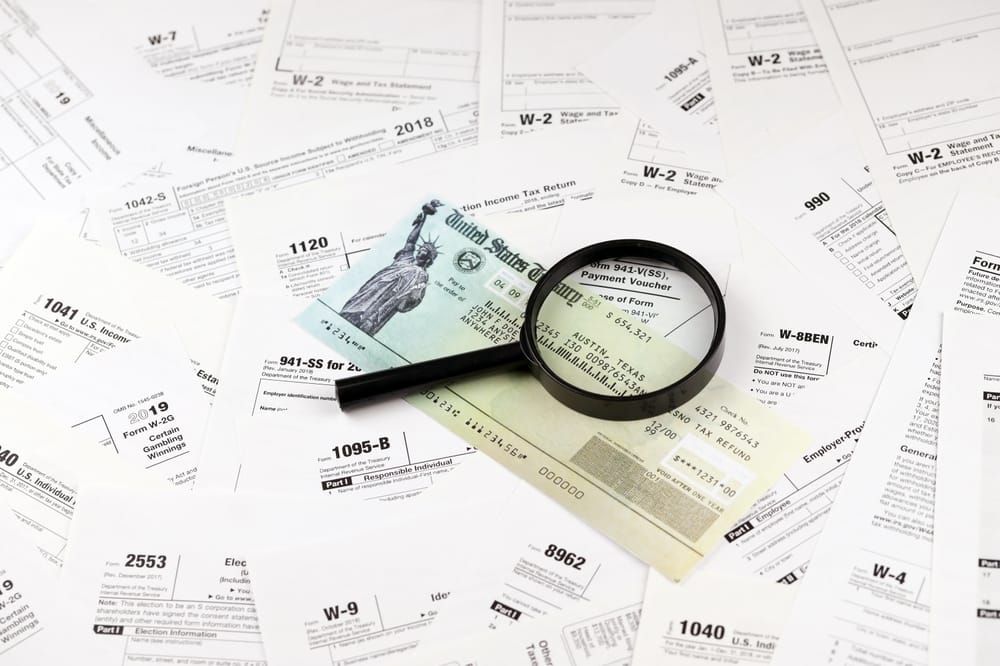
If you opened your mailbox this week to find an IRS Form 1099-K from Venmo, PayPal, or CashApp for a few thousand dollars, your first instinct was likely a mix of confusion and dread. After all, the One Big Beautiful Bill Act (OBBBA) was supposed to fix this. It retroactively raised the 1099-K reporting threshold back to the original $20,000 and 200 transactions, specifically to stop casual users from being buried in tax paperwork.
So why are you holding a form for $1,200? The answer is a “Systemic Lag” in the gig economy. Many payment processors built their 2025-2026 reporting engines around the old $600 rule and simply haven’t updated their logic to match the new OBBBA standards.2 For seniors who used these apps to split dinner checks or receive birthday gifts, these “Erroneous 1099-Ks” are essentially digital ghosts of a law that no longer exists. But you cannot simply ignore them—if the IRS receives a copy, they expect to see it on your return. Here is the 3-Step “Zero Out” Rule to handle these forms without paying a dime in unnecessary tax.
The “Ghost Form” Problem
The IRS systems are largely automated. If a platform like PayPal issues a 1099-K with your Social Security number on it, a “matching” flag is created in the IRS database. If you file your taxes and that $1,200 isn’t listed, the AI will eventually trigger an Automated Underreporter (AUR) notice (CP2000), which can freeze your refund or result in a tax bill plus interest. According to IRS Fact Sheet 2025-08, even though the OBBBA threshold is $20,000, “TPSOs (Third-Party Settlement Organizations) may still send a Form 1099-K for amounts lower than the thresholds.” In short: they aren’t required to send it, but they can, and if they do, the burden of proof shifts to you.
Step 1: Request a Correction (The Paper Trail)
The official IRS stance is that you should first try to get the issuer to “de-certify” the form. Contact the help center of the app that sent the form—whether it’s Venmo or eBay—and state that the form was issued in error under the OBBBA guidelines (Section 70432). As noted by H&R Block, you should keep a copy of this request and any “ticket number” they provide. While most apps will be too backlogged to issue a “Corrected 1099-K” before April, having this paper trail is your insurance policy in case of a manual audit.
Step 2: The “Schedule 1” Wash
If you can’t get a corrected form (which is likely), the IRS has provided a specific “Wash” maneuver to neutralize the income. You will use Schedule 1 (Form 1040) to report the income and then immediately subtract it.
According to IRS Publication 525:
- Part I – Line 8z (Other Income): Enter the amount from the 1099-K and label it: “Form 1099-K Received in Error.”
- Part II – Line 24z (Other Adjustments): Enter the exact same amount as a negative and label it: “Form 1099-K Received in Error.”
This creates a $0 net effect on your Adjusted Gross Income (AGI).5 The “matching” algorithm is satisfied because it sees the 1099-K amount on your return, but you aren’t actually being taxed on it.
Step 3: The “Basis” Backup (For Personal Sales)
If your 1099-K was triggered by selling personal items (like an old couch or a set of golf clubs), the “Zero Out” rule still applies, but the labeling is different. Since personal items are almost always sold at a loss, the proceeds are not taxable. As TurboTax explains, if you sold a $1,000 sofa for $400, your “basis” ($1,000) is higher than the sale price. On Schedule 1, you would label the entries: “Form 1099-K Personal Item Sold at a Loss.” By using this specific phrasing, you are telling the IRS that while money changed hands, there was no “gain” or “profit” to be taxed.
State-Level Considerations: The $600 Hangover
Be careful: while the federal OBBBA threshold is $20,000, several states have not updated their local laws.
- Massachusetts and Maryland still require state-level reporting at $600.
- New Jersey requires reporting at $1,000.
If you live in one of these states, your 1099-K might be “erroneous” for your federal return, but perfectly valid for your state return. As reported by KLR Accounting, you may still owe state income tax on that $1,200 if you cannot prove it was a “gift” or a “reimbursement.”
Don’t Let a Form Ruin Your February
The 2026 filing season is the first real test of the OBBBA 1099-K rules. While the law is on your side, the technology is still catching up. If you receive one of these forms in error, don’t ignore it and don’t pay tax on it. Use the Schedule 1 Zero Out Rule to satisfy the IRS computer while keeping your cash where it belongs—in your retirement account.
Did you get a 1099-K for a tiny amount this month? Leave a comment below with which app sent it.
You May Also Like…
- 6 Best Side Hustles in 2026
- New 1099-K Rules Explained: Why the $20K and 200 Transaction Limit Isn’t the Win You Think It Is
- Form 1099 vs. W-2: Key Differences and When to Use Each
- January 20th Deadline: Why Thousands of Seniors Are Losing This Federal Tax Credit Next Week
- Georgia Tax Alert: The ‘Side Hustle’ Audit That Is Already Costing Atlanta Residents Their Tax Refunds

Teri Monroe started her career in communications working for local government and nonprofits. Today, she is a freelance finance and lifestyle writer and small business owner. In her spare time, she loves golfing with her husband, taking her dog Milo on long walks, and playing pickleball with friends.
Read More

The IRS has finalized new regulations that could catch many retirement savers off guard. Starting…

Budgeting in retirement is a necessity, but not all budget hacks are created equal. Some…

Do you invest in digital money such as Bitcoin or Ethereum? If so, then…

Opening your mailbox and seeing that distinctive "Internal Revenue Service" return address is enough to…

For many older homeowners, property taxes are one of the biggest financial burdens in retirement.…

For nearly a decade, the "SALT cap" was the bane of retirees living in high-tax…
Comments