Entering 2026, the cost of “looking inside” is rising faster than almost any other outpatient service. While many seniors were prepared for the standard inflationary updates, a major shift in how diagnostic procedures are billed has caught many off guard. As of January 1, 2026, the Medicare Part B annual deductible has increased to $283, and the standard monthly premium has jumped nearly 10% to $202.90. These baseline increases are being compounded by a new “unbundling” strategy where hospitals and clinics are splitting a single scan into multiple separate charges, leading to a much higher total bill for patients.
1. 3D Screening Mammograms (Tomosynthesis)
While the Affordable Care Act (ACA) generally covers routine 2D screening mammograms at 100%, 2026 has introduced a new “upgrade gap” for 3D tomosynthesis. Many hospital-owned facilities are now billing the 3D portion of the scan as a separate, elective service that is not always considered “preventative” under every plan. According to new HRSA guidelines for 2026, while first-dollar coverage is expanding for follow-up imaging, many seniors still face an “upfront” charge for 3D technology if their primary care provider does not explicitly code it as medically necessary for dense breast tissue. This “technology surcharge” can add anywhere from $50 to $100 to what was supposed to be a free visit.
2. Cardiac PET Scans and Stress Tests
If you are monitoring heart health, you may notice that “global pricing” for stress tests has disappeared. Under the CY 2026 Physician Fee Schedule (PFS) final rule, CMS has finalized a series of “efficiency adjustments” that have significantly altered how cardiac imaging is reimbursed. Hospitals are now billing the “technical component” (the machine and the isotopes) separately from the “professional component” (the cardiologist’s interpretation). Because these two pieces can have different coinsurance rates, seniors are often receiving two separate bills that, when combined, exceed the single co-pay they paid in 2025.
3. Advanced Bone Density (DEXA) Scans
DEXA scans are essential for managing osteoporosis, but billing rules have shifted how “follow-up” scans are categorized. While a baseline scan every two years remains covered, any additional imaging requested because of a change in medication or a recent fracture is being coded as “diagnostic” rather than “preventative.” Once a scan is labeled diagnostic, it is applied directly to your $283 Part B deductible and subject to a 20% co-pay. This subtle shift in coding is resulting in $150+ bills for seniors who were told their bone health monitoring was “covered.”
4. MRI with Contrast (Unbundled Dye Fees)
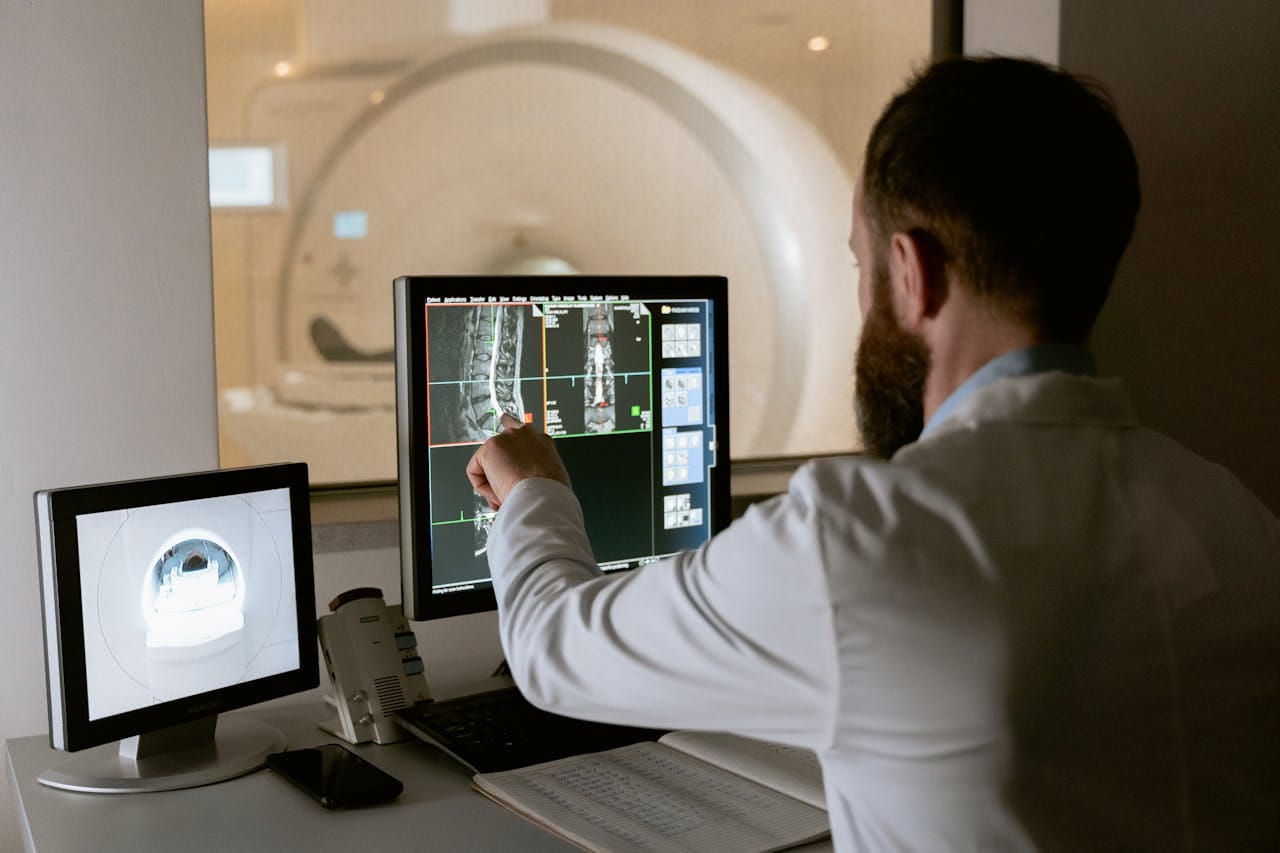
In 2026, the contrast agent used to make your MRI clearer is no longer being “bundled” into the cost of the scan at many facilities. Hospitals have begun billing the contrast material as a separate “supply” or “specialty pharmaceutical” under the new 2026 OPPS/ASC payment updates. This unbundling means that after you pay the 20% co-pay for the MRI itself, you may receive a second bill specifically for the gadolinium or iodine used during the procedure. These dye fees can range from $75 to $300, depending on the facility’s private-pay rate.
5. Low-Dose CT (Lung Cancer Screening)
While Medicare expanded eligibility for lung cancer screenings recently, there is a new “facility fee” surge for these services. Because many independent imaging centers have been acquired by hospital systems, the same CT scan you received last year may now carry a “hospital outpatient” surcharge. Under the 2026 Outpatient Prospective Payment System (OPPS), these facility fees are designed to cover the hospital’s higher overhead, but for the senior, they often manifest as an extra $150 “access fee” that doesn’t exist at a standalone clinic.
6. Ultrasound for Chronic Monitoring
Whether it’s for thyroid nodules, gallstones, or abdominal aortic aneurysms, routine ultrasound monitoring has become significantly more expensive. CMS has implemented new “Anatomical Modifier” requirements that require providers to specify exactly which area of the body is being scanned to prevent “duplicate billing.” While this is meant to reduce fraud, the administrative burden has led many clinics to raise their base rates for these simple, non-invasive scans. If you have multiple areas scanned in one day, you may now find yourself paying the full 20% co-pay for each “anatomical site” rather than a single visit fee.
The Hidden Cost of “Unbundled” Imaging
The 2026 healthcare landscape is moving away from simple, “all-in-one” pricing for diagnostic imaging. As hospitals unbundle services and the Part B deductible rises, the responsibility for price discovery has shifted entirely to the patient. To avoid being hit with these six imaging services costs 2026, always ask for a “Good Faith Estimate” that includes the professional fee, the technical fee, and any supply or facility fees. By choosing standalone imaging centers over hospital-based departments, you can often save hundreds of dollars while receiving the same quality of care.
Were you surprised by a bill for a “free” screening this year, or did you receive two bills for a single MRI? Leave a comment below and tell us which imaging service caught you off guard in 2026—your experience can help other seniors know what to watch for.
You May Also Like…

Teri Monroe started her career in communications working for local government and nonprofits. Today, she is a freelance finance and lifestyle writer and small business owner. In her spare time, she loves golfing with her husband, taking her dog Milo on long walks, and playing pickleball with friends.
Read More


Budgeting in retirement is a necessity, but not all budget hacks are created equal. Some…

You may not notice it when checking your bank account once or twice a month,…

There's a false impression that in order to shop at Costco warehouses, you have to…

These days, fewer people paying for cable and satellite services. Instead, more people are turning…

For many older homeowners, property taxes are one of the biggest financial burdens in retirement.…

Hospitals and insurers rely on billing codes to classify medical services, treatments, and procedures. These…
Comments