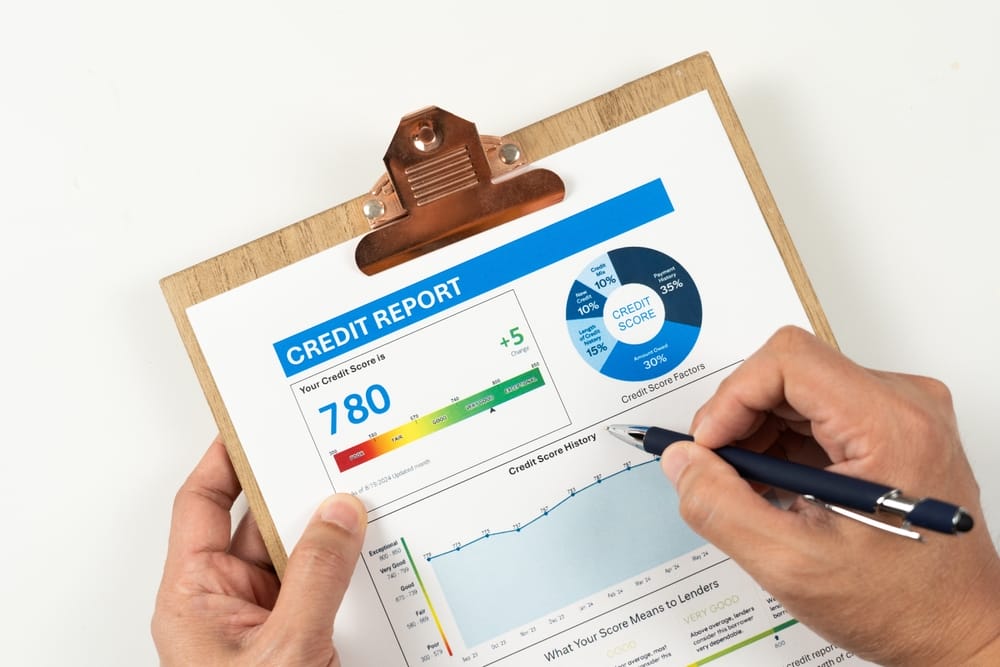
For nearly a generation, the number 620 was the most important digit in a homebuyer’s life. It was the “black-and-white” minimum required to even be considered for a conventional mortgage backed by Fannie Mae. If your FICO credit score was 619, you were effectively locked out of the conventional market, regardless of how much you had in savings or how stable your career was.
As we enter 2026, that rigid barrier has officially crumbled. Following a series of updates to its Desktop Underwriter® (DU®) system that began in late 2025, Fannie Mae has removed the mandatory minimum credit score requirement for loans submitted through its automated platform. While headline-grabbers suggest this is a “loosening” of standards similar to the subprime era, the clinical reality is quite the opposite. This isn’t about lowering the bar; it’s about changing how we measure the bar. The real reason for this shift is a move toward Holistic Underwriting—a data-heavy approach that prioritizes real-world cash flow over a single, often flawed, three-digit number.
Why the “Magic Number” Failed the Modern Economy
The traditional FICO score was designed for a 20th-century economy. It rewards people who carry multiple credit cards and installment loans but often penalizes those who prefer to live a “cash-and-carry” lifestyle. This created a massive class of “credit-invisible” or “thin-file” borrowers—individuals who have never missed a rent payment in a decade but have a lower score simply because they don’t use revolving debt.
According to recent updates from Fannie Mae, the removal of the 620 floor allows their proprietary risk models to evaluate a borrower’s full financial profile. Instead of a “pass/fail” based on a score, the system now analyzes a multitude of factors, including income stability, asset reserves, and debt-to-income (DTI) ratios. This change acknowledges that a borrower with a 610 score and $50,000 in savings is often a lower risk than a 720-score borrower with zero reserves and high debt.
The Shift to VantageScore 4.0 and FICO 10T
The 2026 mortgage landscape is also seeing a technical overhaul in the scores that are still used. Under the direction of the Federal Housing Finance Agency (FHFA), Fannie Mae is transitioning from “Classic FICO” to more advanced models: VantageScore 4.0 and FICO 10T.
These new models are “trended,” meaning they don’t just look at a snapshot of your debt today; they look at whether your balances are rising or falling over a 24-month period. More importantly, these models are designed to incorporate alternative data—such as on-time rent, utility, and even cell phone payments—directly into the calculation. By removing the hard 620 minimum, Fannie Mae is clearing the way for these more accurate, inclusive models to take center stage, allowing for a fairer evaluation of younger buyers and those in underserved communities.
Alternative Data: The New Gold Standard
One of the most consequential aspects of the new 2026 guidelines is how nontraditional credit is handled. If the automated system detects that a borrower has little to no traditional credit history, it no longer triggers an automatic rejection. Instead, it prompts the lender to document a “nontraditional credit profile.”
As noted by Rocket Mortgage, these “off-report” indicators of reliability now carry significant weight:
- Rental History: Consistent, on-time rent payments verified through bank statements or third-party services.
- Cash Flow Analysis: A 12-month review of bank accounts to ensure the borrower’s “net” monthly income consistently exceeds their expenses.
- Utility Consistency: Proof that the borrower has maintained electricity, water, and internet services without interruption.
- Reserves: The number of months of mortgage payments a borrower has in liquid savings (e.g., 401k, savings, or brokerage accounts).
The “Lender Overlay” Reality Check
While Fannie Mae has removed the 620 floor at the investor level, borrowers should be prepared for lender overlays. Just because Fannie Mae will buy a loan with a 580 score doesn’t mean every bank will be willing to originate it. Many regional banks and credit unions still maintain their own internal minimums to protect their balance sheets.
Furthermore, Private Mortgage Insurance (PMI) providers—the companies that protect the lender if you put down less than 20%—often have their own rigid score requirements. Even if you are “approved” by Fannie Mae’s automated system, your loan could still be denied or become prohibitively expensive if a PMI provider refuses to cover a sub-620 score. As reported by Churchill Mortgage, the goal of the 2026 shift is to make the process “predictable and inclusive,” but it still requires borrowers to have a very strong “compensating factor” if their score is low.
What This Means for 2026 Homebuyers
The removal of the minimum credit score requirement is a victory for transparency and common sense. It means that the “story” of your financial life matters just as much as the “number.” However, this doesn’t mean you should ignore your credit. In fact, in a world of “trended” data, your habits are being watched more closely than ever.
If you are planning to buy a home this year, your focus should be on liquidity and consistency. Build your “reserves” to show you can handle a crisis, and ensure every utility and rent payment is documented and on time. The “gatekeeper” may be gone, but the standards for responsibility are higher than ever. By embracing this holistic approach, Fannie Mae isn’t making it “easier” to get a loan—they are making it “smarter” to get a loan, ensuring that the 2026 housing market is built on a foundation of real-world ability to pay.
Have you noticed your lender asking for rent or utility history lately, and did you find that it helped you qualify for a better rate despite a “thin” credit file? Leave a comment below and share your 2026 home-buying journey!
You May Also Like…

Teri Monroe started her career in communications working for local government and nonprofits. Today, she is a freelance finance and lifestyle writer and small business owner. In her spare time, she loves golfing with her husband, taking her dog Milo on long walks, and playing pickleball with friends.
Read More


There are huge disadvantages of having no credit score. I actually know this better than…

Low credit scores are a severe hindrance. When your score is on the lower side,…

When people think of credit bureaus, they usually think there are only 3: Experian, Equifax,…


Debt Collection Changes How many times do you question a friend request on social…
It's one of the worst feelings you can ever have. That moment when you see…

Credit scores play a significant role in people’s financial lives. As a result, those without…
Comments