The Saving Advice Forums - A classic personal finance community.

If I had a million dollars

Collapse
X
 
  • Filter
  • Time
  • Show
Clear All
new posts

  • #16
    Index funds are great from an investing cost perspective, but I'm not sure that democratizing capital is all its cracked up to.

    Index funds have clear advantages from an investing cost perspective. For example, they're super cheap. But nobody seems to be thinking about the long term consequences for capitalism of the widespread shift to index mutual funds.

    In the 1950s and 1960s, there were far more firms owned by individuals who had concentrated ownership positions in their companies. This would typically be founding families who owned say..55% or 60% of the shares of their firms.

    The advantages of concentrated ownership were what owners could limit the amount of salary management took and could keep management on a long term growth track.

    Now that ownership has become more dispersed through indexing and mutual funds, there isn't any real check on management's excesses. CEOs are free to loot their companies in the form of high salaries and focus on short term gains rather than long term shareholder value.

    So, while index funds have been great from an investor costs perspective they've actually undermined some of the traditional checks and balances in our capitalist system.
    Last edited by james.hendrickson; 07-16-2018, 11:32 AM.
    james.c.hendrickson@gmail.com
    202.468.6043

    Comment


    • #17
      Yeah, I hear that a lot: If everyone indexes, there will be no one to discover value which in turn moves stock prices. Therefore the market becomes inefficient and we have total anarchy, cats and dogs living together, that sort of thing.

      I don't worry about that too much. Greed will always drive plenty of people to try to beat the average (index). It's a closed loop system. So if someone is beating the average, an equal number of people will be short of the average.

      Since 80% of mutual funds have not beaten their index over the last ____ years, I'll go with average.

      And there are myriad studies that show that the best indicator of a mutual fund's performance is (wait for it....): cost. The lower the cost, the better the performance. Go figure.

      Comment


      • #18
        Originally posted by james.hendrickson View Post
        In the 1950s and 1960s, there were far more firms owned by individuals who had concentrated ownership positions in their companies. This would typically be founding families who owned say..55% or 60% of the shares of their firms.

        The advantages of concentrated ownership were what owners could limit the amount of salary management took and could keep management on a long term growth track.

        Now that ownership has become more dispersed through indexing and mutual funds, there isn't any real check on management's excesses.
        I think you are confusing things. Whether or not a company is privately held or publicly traded has nothing to do with the existence of mutual funds.

        I'm not sure of the stats from the 50s but over the past 20 years, the number of publicly traded companies has actually decreased by more than half due to mergers and acquisitions. But again, whether or not a company is public has nothing to do with mutual funds so I'm not really sure what your point is here James.
        Steve

        * Despite the high cost of living, it remains very popular.
        * Why should I pay for my daughter's education when she already knows everything?
        * There are no shortcuts to anywhere worth going.

        Comment


        • #19
          Originally posted by corn18 View Post
          Very low cost index funds. U.S. Total Stock Market, U.S. Total Bond Market and Total International Market. 60% Stocks (of which 25% are international), 40% bonds.

          That't it. I'm a boglehead.
          What about precious metals, I've been hearing a lot about them and was wondering if that would be a good investment or not? If so where/how would I buy some?

          Comment


          • #20
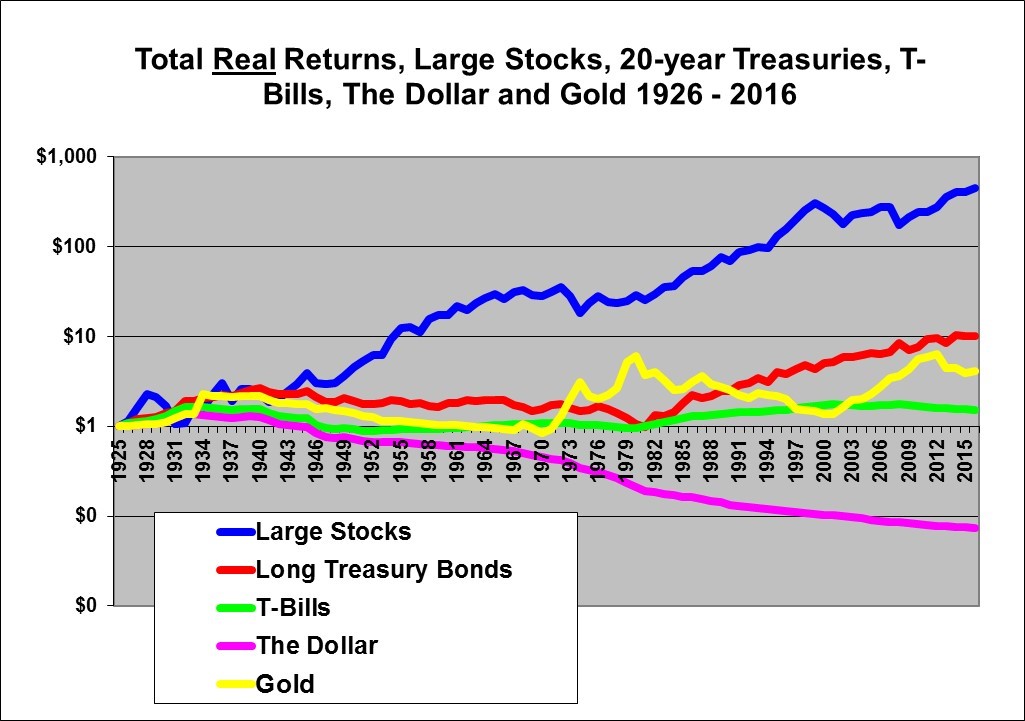
            PM's are good for storing wealth, not building it. I don't own any and don't plan to.

            Comment


            • #21
              Originally posted by Rocco1235 View Post
              What about precious metals, I've been hearing a lot about them and was wondering if that would be a good investment or not? If so where/how would I buy some?
              Rocco - like a lot of questions in finance - it depends. Right off the top of my head, you've got at least three options for owning precious metals.

              1) You can buy and own bullion directly. Marketplaces like kitco.com, apmex.com and grassroots sources like offerup, craigslist or facebook marketplace are all great ways to find precious metals to buy. You can also go to a local coin shop, but they'll charge you a bigger mark up. Buying larger lots of bullion is usually less expensive in terms of transaction and shipping costs.

              2) You can own stock in mining companies. The value of shares in mining companies tends to move in tandem with prices of precious metals. Buying them is easy - just get a brokerage account with Schwab, TD Ameritrade, or the like.

              3) You can own mutual funds or ETFs that give you exposure to precious metals. If you're going to do this be sure you exercise best practices and get a fund with a strong rack record and low expense ratio. You can also get these via schwab or TD Ameritrade.

              As a final thought here - I looked at the actual academic finance articles about a decade ago, and I couldn't find good studies which proved that owning precious metals actually diversified ones portfolio or provided adequate protection against inflation. So, I wouldn't put more than 5 percent of your net worth into this asset class.
              james.c.hendrickson@gmail.com
              202.468.6043

              Comment

              Working...
              X