The Saving Advice Forums - A classic personal finance community.

Mini-essay on supplements

Collapse
X
 
  • Filter
  • Time
  • Show
Clear All
new posts

  • Mini-essay on supplements

    I know this was discussed here before. . .and I have been really researching this subject as I, yes, make profit from selling supplements in my practice. (will disclose I am a capitalist)

    The argument that all supplements are peed out aside, I am learning there really are differences between supplements.

    I tell my patients to take a fish oil, for instance. They tell me, "Oh, I am taking one from BJ's or Walmart." I say, "Oh, okay, how much EPA and DHA does it have in it?" And they look at me like I caught them with a deer in the headlights, like, "What the hades is that?"

    So I have them bring the bottle in for me.

    Often it's not even listed. Are they just squeezing fish and putting them in capsules and hoping for the best?

    Or my office manager comes in with a probiotic this morning proudly exclaiming she found it on sale for $5.00. Awesome, can I see how many bacteria and what strains are in it? The probiotic I dispense at therapeutic levels is 25 billion (after major antibiotic/h. pylori infection). . .hers is 1 billion per tablet. Plus they weren't refrigerated ( preserves bacteria - you can expect 20-50% loss from non-refridgeration).

    THen she tells me she takes it on an empty stomach. (expect stomach acid to kill about another 50% of those good critters)

    She then says she read an article that said that money doesn't mean anything with supplements.

    Well, yeah, it's kind of like cars. . .there are Yugos and Mercedes. The supplements I carry are generally in the Honda or Acura kind of range. And yes, I have seen someone come in paying more money for fish oil that isn't even measured (a Caddillac price for a Yugo) so yes, money kind of does mean nothing in one aspect that anyone can charge you anything.

    But kind of like mattresses, yes, I think there are constructed differences between a $400 mattress and $4000 mattress. . .do you need a $4000 mattress? No! Not necessarily. But I am not sure the $400 one is going to meet your needs either, if you have any needs besides something to lay on.

    Sorry. . .this has just been a frustrating endeavor for me communicating this part of my business (which is growing, BTW. . .I am getting through slowly - as I find out with any business, it takes work and dedication, that it's not just "easy money").

    A full essay on this is going on my practice blog later. . .will link you to it if it's okay with administrators.

  • #2
    I am an avid weight lifter and take tons of supplements. Mostly proteins, creatines, bcaa, glutamine, and the like.

    There is a difference when it comes to price. The way that supplements are manufactured makes a huge difference.

    Is it possible to pay good money for garbage? Yes. So, the only thing that you can do is to do your homework. Don't chase after the latest and greatest thing. Stick to what has been around and what others say works for them. I talk to people at the gym all the time about what they like. I also visit several sports and fitness forums to read product reviews and others' opinions on different products.
    Brian

    Comment


    • #3
      I, for one, happen to love my $4000 mattress. Good sleep is important, and my mattress is probably the single most expensive thing I own besides my house and one of our cars.

      Comment


      • #4
        Originally posted by Scanner View Post
        The probiotic I dispense at therapeutic levels is 25 billion (after major antibiotic/h. pylori infection). . .hers is 1 billion per tablet.
        The problem I see here is this: what is the proper, safe, effective dosage? Is it 25 billion? Is it 1 billion? Is it somewhere in between? Does anybody really know?

        Prescription medications that are FDA-regulated go through extensive and rigorous testing on thousands of patients to determine safe and effective therapeutic doses. They go through double-blinded, placebo-controlled studies.

        Supplements are not regulated. They aren't required to go through the same testing or quality control. I've seen studies done on supplements that have shown the pills often don't contain what the label says they contain. Sometimes it is more; sometimes it is less. And that wasn't only the case with the cheap generic brands. It happens with the more costly name brands, too.

        As a more traditional physician, though not totally opposed to complementary treatments, my main concerns are if the supplement is actually needed, if it will actually do anything to benefit the patient (beyond what the testimonials claim), if it is safe, if it has any known drug interactions and what an appropriate dose is. These are all questions that can be extremely difficult, if not impossible, to get accurate answers to.

        I do think that in recent years the situation has started to get better as more real studies have been undertaken, and I'm all in favor of that. I'd be happy to recommend supplements to my patients once I had some reasonable scientific evidence that they work and good studies backing up how they should be taken. When a patient brings me a supplement bottle to ask my opinion and the label reads, "Take 1 to 6 pills daily" it is pretty hard to take that seriously. Can you imagine me giving a patient with high blood pressure a prescription with those instructions?
        Steve

        * Despite the high cost of living, it remains very popular.
        * Why should I pay for my daughter's education when she already knows everything?
        * There are no shortcuts to anywhere worth going.

        Comment


        • #5
          I tend to come down on the side of some vitamins simply because I know from personal experience what I feel like when I take them and what I feel like when I don't. If I don't take magnesium and potassium, I get violent calf cramps. If I don't take sufficient vitamin D in the winter, SADS kicks my butt. If I don't take fish oil, I can see the results in my skin. I'll use liquid vitamin E directly on a mild to medium burn and it will be less painful and heal much faster. It also heals the occasional pimple in about 1/3 of the time. Vitamin C I'm not terribly sure about, as I seem to get just as many colds on it as off it. Multivitamins seem counterproductive to me, as I might be overdosing on things I may not need at all. I take the dosages my physician recommends and the potassium and vitamin D are prescription and I can feel the difference from when I just took OTC versions of them. Until there are actual, proper studies not paid for by either the drug companies or the supplement companies, but pure researchers, I can only go by what my body tells me. In the end, it's the only lab rat that matters.

          Comment


          • #6
            Originally posted by LuckyRobin View Post
            If I don't take magnesium and potassium, I get violent calf cramps.I take the dosages my physician recommends and the potassium and vitamin D are prescription
            I think this is different than some other supplements.

            We can accurately measure your blood potassium level.
            We can accurately measure your blood vitamin D level.
            We have good data on what the normal levels should be.
            We can prescribe supplements and track their effect.
            We know the risks from too much potassium and can reduce the dose if your level gets too high.

            The problem is when someone gets a leg cramp one night and decides on their own to start taking potassium pills without consulting a doctor or getting any testing done. Next thing you know, they end up in the ER with cardiac problems from a high potassium level.
            Steve

            * Despite the high cost of living, it remains very popular.
            * Why should I pay for my daughter's education when she already knows everything?
            * There are no shortcuts to anywhere worth going.

            Comment


            • #7
              Originally posted by disneysteve View Post
              I think this is different than some other supplements.


              The problem is when someone gets a leg cramp one night and decides on their own to start taking potassium pills without consulting a doctor or getting any testing done. Next thing you know, they end up in the ER with cardiac problems from a high potassium level.
              Well, yeah, it was based on my blood work. I'd need potassium anyway because of my high blood pressure meds, even if I didn't have the leg cramps. But if you are taking the standard dosage of magnesium and potassium I'm not sure why you'd overdose on it, unless you're dealing with people who think if one is good, two must be better. Which you probably are...

              Comment


              • #8
                Don't you have to be careful how you do your own 'cocktail' of vitamins and how you dosage them and combine them - there are certain balances to maintain or you throw that off whack.

                The fish oil is either good quality or questionable. I went with organic flax for a source.

                You do have to research it and know your sources (don't believe only what someone who is selling them tells you). Check up on their research and the way they arrive at their info.
                Don't believe the probiotic hype by the companies selling the sugary yogurts. Once you learn labeling laws it is amazing what claims they are able to get away with.

                I like the Andrew Lessman vitamins (expensive so don't really purchase that much yet) as he does a lot of studying on this and his research is trackable to other sources.

                Agree the probiotic fad (mostly in yogurt) turns out not to be the best way to ingest which had a lot of people wasting money.

                Mega amounts of any vitamin or herb is never a good idea.

                Comment


                • #9
                  Originally posted by PetMom View Post

                  Agree the probiotic fad (mostly in yogurt) turns out not to be the best way to ingest which had a lot of people wasting money.
                  Unless you culture your own, which makes it an excellent source without the sugar or the preservatives! YUM!

                  Comment


                  • #10
                    The problem I see here is this: what is the proper, safe, effective dosage? Is it 25 billion? Is it 1 billion? Is it somewhere in between? Does anybody really know?


                    DS,

                    There is actually a lot of research out there, mostly out of Europe.

                    Europe is kind of a funny/different place for healthcare. In the US, supplements and pharmaceutics are kind of "tiered" in dispensing. In Europe, you would find a MD recommending a probiotic in one visit and the next visit a pharmaceutical. They don't think in terms of always a refined chemical solution like Americans tend to.

                    Practice patterns are entirely different in the US, with 97% of visits to the MD ending in a pharmaceutical Rx.

                    As far as probiotics, the general consensus among microbiologist researchers is you need about 10 billion to achieve a therapeutic dosing. You must take with food or you will lose 50% of those good critters. Also, refrigeration helps preserve the count, although any good company should put some "overage" into the amount they produce so you are getting nearly the count you think you are so refridgeration isn't absolutely necessary.

                    The "healthy maintenance dosage" is debatable.

                    I recommend 5 billion if you have had problems in the past with the GI system. If you have no GI problems, then 1-2 billion is okay, just for "health."

                    Also, be aware, the placebo effect is strong with IBS (irritable bowel syndrome) patients. . .you can give them a sugar pill and swing a dead cat over their head and they would get a response. . .the probiotics I dispense have at least 12 weeks of tracking showing an effect beyond placebo.

                    I do part ways with one recommendation. . .researchers suggest taking a probiotic while on an antibiotic. I personally rather just wait until they've completed it, send 25 billion or more down the gut, repopulate the gut quickly, and then maintain (if needed). I think you ARE throwing good money after bad if they are taking penicillin and an probiotic. . .those good critters just can't take hold.

                    You are better off on the BRAT diet (bananas, rice, apples, toast for those not healthcare oriented) during a round of antibiotics.

                    Well, I hope this discussion has helped somewhat.

                    What I have concluded about OTC supplements is this:

                    They are often watered down just enough so they can still label them "probiotic" or "fish oil" or whatever and that's why they seem like such a good value.

                    Comment


                    • #11
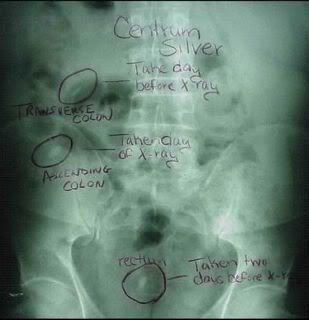
                      Here's a good photo I have out in the waiting room to drive my point home:

                      Comment

                      Working...
                      X