The Saving Advice Forums - A classic personal finance community.

Broken Arrow: Sound familiar?

Collapse
X
 
  • Filter
  • Time
  • Show
Clear All
new posts

  • #31
    I'm sorry but the question in itself isn't logical at all. Some are worth more than that, and some are less. To me, you either figure out which is which, or you diversify to cover yourself. It's also the same reason why I don't bet the farm on any one single company (or commodity or even asset class).
    Of course. I understand the philosophy. I am not anti-diversification per se. I just can't ignore trends on the stock market and I question the stock market being the "meat" of a portfolio and bonds, real estate, and commodities being the potatoes and dessert.

    Valuation is a great term to bring up. You say, "well, some are worth that, other's aren't."

    BA, in my business world, you never, EVER pay 20X what a business earns for a business. You just don't. If you got a Subway netting $100,000/year, maybe. . .maybe you pay $200,000 for it. . .maybe $300,000 (beyond assets - I am assuming no real estate holding and $50,000 or less in apprasied equipment and inventory). .but certainly not $2,000,000.

    Yet, everyday in the stock market world we pay fund managers this premium (or you do it yourself) to buy into this "prosperity."

    I"ll tell you though. . .I think going public is the sweetest deal for a business. I am going to look into this. I mean, I just get listed on the NYSE or AMEX and people will throw money at me.

    Then, in a few months, I send out a lettter:

    "Dear Investor:

    Thank you for investing with Scanner, Inc. I know our mission statement said we were about service, value and creating health in communities. However, that wasn't simply true.

    It was about money and alwyas was.

    By the time you read this, I'll be sitting in the Caribbean sipping Mai Tai's."

    Sincerely,

    Scanner, Exective CEO


    Seriously though, I just look at things different. I am not being psychic. . .I rather like to look at it if my grandkids were asking me, "What were you and Grandpa Brokenarrow thinking in 2009?"

    "I learned in history class today that in 2009, it was commonplace to give company's 20X their earnings for a price of their share. What were you thinking, Grandpa? That's why you're in the funny farm and Crazy Uncle Scanner is trying to remember where he buried his coffee cans of silver bullion."

    LOL.

    No, seriously, I appreciate you defending the party line, I really do.

    Comment


    • #32
      Oh, and someone fetch me a complicated looking chart for BA and KV. . .I can't win this debate unless I have a chart that makes M's and V's and has an arrow pointing upward

      And if I didn't say any fancy words before well. . .so I'm going to say this, in Harvard Debating Format, Broken arrow:

      "I find your market capitalization theories lacking in beta, alpha, and very off the mark, representing at least 2 standard deviations from weighted average life."

      Comment


      • #33
        Originally posted by Scanner View Post

        "I learned in history class today that in 2009, it was commonplace to give company's 20X their earnings for a price of their share. What were you thinking, Grandpa? That's why you're in the funny farm and Crazy Uncle Scanner is trying to remember where he buried his coffee cans of silver bullion."

        LOL.

        No, seriously, I appreciate you defending the party line, I really do.
        Scanner, I'm not trying to "win" any debate. I just like to hear other people's views on things. You've definitely opened my eyes to some things, but unfortunately I don't think we've returned the favor.

        Anyway, no charts nor graphs this time but I did run some numbers for ya and it seems as if the grandkids may be asking what Crazy Uncle Scanner was thinking at the time also. The silver bullion may be safe in the buried cans, but I took a look at the REZ ETF that you just bought and came up with this:

        59% of net assets in top 10 holdings.
        Avg. P/E of those 10 without the 2 outliers: 35.9
        Avg. P/E with outliers: 84.4

        And the outliers were holdings with a 17.6 P/E (and you thought THAT was high) and one with a P/E of 539.2 I don't even know how you get one that high.

        And the forward P/E avg. of those isn't any more soothing:
        Forward P/E of 26.5 with the outliers taken out and 56 with them in.

        Not saying that that sector isn't due for a comeback at some point, but I'm just trying to show that you're taking just as much risk and/or speculating just as much (if not more) than what we are in the "normal" stock market.


        PS. I'll have to talk to BA about loaning me some money before I can take you up your business deal
        The easiest thing of all is to deceive one's self; for what a man wishes, he generally believes to be true.
        - Demosthenes

        Comment


        • #34
          KV,

          YOu are more helpful than you think. I like to lay my strategies out there in the open and have people throw eggs and rocks at it and see what's still left standing when all is done and said.. (which you did )

          I was just kidding on the complex chart thing and we were debating in a friendly manner. . .

          And good point on the P/E ratio although I think real estate has more of an intrinsic equity to it than the "goodname" of Microsoft let's say. You purchase RE and you buying dirt, a building, something tangible. . .you buy common stock of a company, you are buying into "future prosperity" and at 20X earnings on average.

          Do you think American company's earnings will continue to exponentiate?

          I think the way to lure me back into the stock market is with dividend stocks vs. growth. I'll think about buying a stock if it pays me money every quarter. . .but I am not sure about buying into future prosperity.

          Comment


          • #35
            Originally posted by Scanner View Post
            I question the stock market being the "meat" of a portfolio and bonds, real estate, and commodities being the potatoes and dessert.
            I'm OK with that, and that's a good question to throw around.

            BA, in my business world, you never, EVER pay 20X what a business earns for a business. You just don't. If you got a Subway netting $100,000/year, maybe. . .maybe you pay $200,000 for it. . .maybe $300,000 (beyond assets - I am assuming no real estate holding and $50,000 or less in apprasied equipment and inventory). .but certainly not $2,000,000.
            Ok, I looked at this several times, and the more I looked at it, the more I am confused by what you're trying to say here.

            You don't have to buy the whole business. You're only buying shares of it. That way, even if a business bellies up, you risk only that portion of the money.

            But if you think it will belly up, then don't buy it.

            And typically, regardless of valuations (and valuation strategy for that matter) if it goes up 5%, your money still goes up 5%.

            I find the PE ratio most useful when comparing one company to another. I think that's what it's really meant for, because earnings is a common denominator across all businesses.

            I'm really trying to keep it simple here, because there's a lot more to say about this.

            In the end, there's nothing inherently wrong with buying companies that are valued at 20X earnings, but if that really bothers you, then just buy something else.

            No, seriously, I appreciate you defending the party line, I really do.
            I'm not trying to defend anything. I'm trying to tell you the truth.
            Last edited by Broken Arrow; 10-03-2009, 07:13 PM.

            Comment


            • #36
              Originally posted by Scanner View Post
              And good point on the P/E ratio although I think real estate has more of an intrinsic equity to it than the "goodname" of Microsoft let's say.
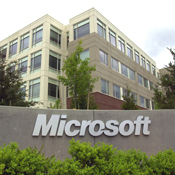
              Sigh. Microsoft has a headquarter in Redmond, WA. I don't know what its real estate value is, but I am quite sure it is worth millions upon millions. Last I heard about it, Bill liked to pay cash, and for all practical purposes, the buildings are paid off.

              Here's a quick picture of one of their buildings:


              In fact, they own several buildings on hundreds of acres of land, known collectively as Microsoft Campus. And that's just the headquarter....

              Do all these buildings not have some kind of "intrinsic equity"?

              But what's even better than just having passive buildings and land is that they have a lot of smart people working on a lot of products in these buildings that we all most likely use.

              Even if Microsoft somehow goes belly up tomorrow, all this equipment, all the buildings, and all this land is still going to be worth something to somebody, like any other real estate commodity. As a bonus, because these buildings are paid off, they don't have to re-pay any debts on it... so it's all pretty much profit.

              Most companies do have intrinsic value, more than just a "good name".
              Last edited by Broken Arrow; 10-03-2009, 07:14 PM.

              Comment


              • #37
                Originally posted by Scanner View Post
                Let's say 10 years ago savingadvice.com was here and they asked the Pundits and Me for advice. YOu give the 100 - you age = % stocks advice. . .standard stuff.

                Or they follow my contrarian advice (eitehr uber-conservative or ultra-aggressive) of buying a 10 year US Treasuries (not sure about precious metals) and they are up 4%.

                Following you, they haven't even broke even.
                I just wanted to point something out here. Just because the overall market was flat the past 10 years doesn't mean nobody made any money in stocks during that time. I'm sure billions and billions of dollars were made during that time. Even many fund investors made money. Yes, even the "buy and hold" ones, because there are stock funds that MADE MONEY the past 10 years.

                For example, one of my biggest holdings is Vanguard Health Card (VGHCX). For the 10 year period ended 9/30/09, it had an average annual return of 9.5%. Certainly, I have other funds that didn't do that well, but my point is that when we talk about "stocks" we tend to lump them all together as if they all performed the same and that just isn't true.

                So someone who put 100-age in stocks 10 years ago might have done just fine depending on which stocks they chose.
                Steve

                * Despite the high cost of living, it remains very popular.
                * Why should I pay for my daughter's education when she already knows everything?
                * There are no shortcuts to anywhere worth going.

                Comment


                • #38
                  Broken Arrow,

                  Yes, I realize part of what a company holds may be real estate assets or even commodity assets (like Exxon has an inventory of oil at any one time). If that's the case, why not just buy the REIT or commodity?

                  I think when you get down to it though, a company's worth, or share price, is based on it's "future prosperity", not what it's valuated at any particular day in the market. If that were the case, P/E's would run 1/1 or 3 or 5/1 at the most.

                  In other words, if Microsoft is $25/share, I don't think even $10 of that represents it's RE holdings. I bet $24 of it is the "good name" of Microsoft, Bill Gates, it's "businessplan", mostly intangibles.

                  In other words, by the very nature, the stock market (at least for growth stocks) is speculative, not an investment. OR so I am starting to conclude.

                  I am not sure what the average dividend is out there for a corp. but here is one link:

                  Dividend Yield for Dow Jones Ind. Avg. Stocks, Sorted by Yield - indexArb.com

                  Would you explain to me how major companies can average about 3% dividends but yet can grow 7% with my same $10,000 let's say? To me, it smacks that the growth isnt real and a bit illusionary.

                  I'll take my 3% now (and if more, great) rather than a maybe 7% in 20 years.

                  Comment


                  • #39
                    Originally posted by Scanner View Post
                    Yes, I realize part of what a company holds may be real estate assets or even commodity assets (like Exxon has an inventory of oil at any one time). If that's the case, why not just buy the REIT or commodity?
                    To me, it's the same question the other way around. Why buy just passive commodities, when you can buy a company that has similar intrinsic value and yet also provide a driving business?

                    In other words, if Microsoft is $25/share, I don't think even $10 of that represents it's RE holdings. I bet $24 of it is the "good name" of Microsoft, Bill Gates, it's "businessplan", mostly intangibles.
                    Maybe I don't understand your definition of "good name"? Do you mean branding? As in, should I buy Nike sneakers as opposed to Addidas sneakers? Or do you mean sneakers as opposed to sandals?

                    The former is a brand or what I think you mean by "good name". The latter is a practical concept, regardless of whether you can touch it or feel it. Windows OS, for example, isn't just mere "good name". It's an actual, practical piece of software most of us use, perhaps even yourself. Without it, your computer doesn't work. And yes, that IS worth quite a lot in valuations.

                    In other words, by the very nature, the stock market (at least for growth stocks) is speculative, not an investment. OR so I am starting to conclude.
                    Hehehe yes! The stock market IS highly speculative! That's exactly it, and that's why it's so important to go back to the concept of valuations or diversification. Either figure out what it is exactly that you're buying into, or spread out your risks.

                    But you know, commodities are also highly speculative. Even if we only have to imagine a bar of silver, its worth is still subject to how much people are willing to pay for it.

                    Would you explain to me how major companies can average about 3% dividends but yet can grow 7% with my same $10,000 let's say? To me, it smacks that the growth isnt real and a bit illusionary.
                    Didn't you say you own a business? The basic concept would be the same way your business grew-- let's say 7%-- except let's say that you still own a business loan you have to pay. So, you decide to pay 3% of the money you made towards the mortgage. Now, replace the generic loan with people who have loaned you money for a small stake at your business.

                    Short of illegal activities beneath the surface, there's nothing sinister about the concept at all.

                    I'll take my 3% now (and if more, great) rather than a maybe 7% in 20 years.
                    Uh... that time frame varies. Usually, it's calculated annually.... In fact, monte carlo simulations assume annual growth. Heck, some stocks can even pop up 7% on a single day, but of course, there are those that can take 20 years just to grow 7%. It just depends.
                    Last edited by Broken Arrow; 10-04-2009, 08:47 AM.

                    Comment


                    • #40
                      Maybe I don't understand your definition of "good name"? Do you mean branding? As in, should I buy Nike sneakers as opposed to Addidas sneakers? Or do you mean sneakers as opposed to sandals?
                      No, not branding per se, although having a brand like Microsoft helps. And no, I didn't mean "Windows" - "Windows" is a product with an estimatd value.

                      Maybe "goodwill" is more what I mean. I am fairly well known in my small community, have mostly a good reputation (I think), I could go into the local bank and talk to a banker about I need money to expand in this market or that place and aside from the excuse, "We don't have no more money", I'd probably get it. Secured or unsecured. Micorosoft has these "intangibles" that result in it being worth $25/share. Plus as you note, Microsoft has a "brand" second to none, that I don't have.

                      And intangibles, even though, well, intangible (LOL) are worth something. I am just not sure it's worth 10000% over the tangibles (inventory, RE).

                      Like my business - it is mostly "intangible". . .but I don't think you would pay me 2 million for it (if you were 90% financing, it may actually be such a 1 sided deal, that I wouldn't agree to that price because you couldn't afford the loan payment and would eventually default). . .but mutual fund managers take your money and do it everyday. And using my 1 sided deal analogy, you would think an occasional co. would say, "At $25/share, I don't think you can expect a reaonable return for your investment in the next 10 years. It's too one sided." But I guess it's a sweet deal - unlike bondholders, stockholders don't really expext to be paid back. It's kind of optional.

                      Yeah, it's only part of a company you own but you are buying acommon equity stake.

                      The more experienced of a business person I become (and no, I"ll never be a Gates or Jobs or Ioacoocca), the more it seems weird to me that this is the norm everyday.
                      Last edited by Scanner; 10-04-2009, 08:19 AM.

                      Comment


                      • #41
                        Hehehe yes! The stock market IS highly speculative
                        If highly is the operative word, why make it the "meat" of a portfolio then?

                        Comment


                        • #42
                          Dividend Yield for S&P 500 Stocks, Sorted by Yield - indexArb.com

                          Tell you what. . .you have me thinking, BA (et al.).

                          I perhaps see nothing wrong with buying equal amounts of these companies, the top 10, and then putting a stop order under them (maybe 5%) and just collecting my dividend every quarter (and buying silver and real estate ). My average dividend would be 9%.

                          THe stop order could protect my prinicipal and insure against a little market risk.

                          No, they aren't the DOW but I do recognize a lot of those companies as quality - Diamond Offshore Drilling, Altria, etc.

                          It's not like they are Scanner, Inc. or Broken Arrow, LTD

                          PS: I just did some basic research on DO Drilling at yahoo and it has actually been just as wild as any growth stock. YOu would think a stock that pays a nice dividend (sending out profits to investors) would maintain a consistent share price. Obviously the balance sheet would be the same quarter to quarter so it couldnt really be growing in value. But at a 5% stop order. . .I'd be out in less than a month based on past volatility.

                          Again, I learned that income stocks more or less attempted to maintain a consistent share price. I'll maybe look into the other ones in the S&P 500.

                          An income stock seems to be behaving like a growth stock.

                          All the more reason to confirm I think something vehweee skawoowee is goin on and I have no idea what I am investing in.
                          Last edited by Scanner; 10-04-2009, 09:04 AM.

                          Comment


                          • #43
                            Originally posted by Scanner View Post
                            Maybe "goodwill" is more what I mean. I am fairly well known in my small community, have mostly a good reputation (I think), I could go into the local bank and talk to a banker about I need money to expand in this market or that place and aside from the excuse, "We don't have no more money", I'd probably get it. Secured or unsecured. Micorosoft has these "intangibles" that result in it being worth $25/share. Plus as you note, Microsoft has a "brand" second to none, that I don't have.
                            Ok, maybe I understand now. That is part of the problem that Ben Graham has addressed in his book, and he wrote that like, back in the '40s I think. Sound valuations has to be more than just a gut feeling. It has to take into account of the company's intrinsic value as well, and in as Buffett has elaborated, but also has to take into the intangibles in its proper perspective.

                            Certainly, if you think a company is over-valued based on its "intangibles", then you don't buy! Heck, maybe you even go short.

                            But PE valuation strategies are simply not enough to decide with. If you think about it, it doesn't make any sense to just say, "You know, I want to buy a company that is 20X earning today!" Sometimes, a high PE also means the company is capable of making a lot of money. And sometimes, a low PE also means that the company is dead in the waters.

                            As I've said before, PE ratios work best when you're trying to decide on two or more companies. Let's say Nike and Addidas again, and you're trying to decide which one could give you the better bang for the buck.

                            Finally, a company that makes $100k earnings each year could perhaps be worth $1 million or more in total worth. Therefore, even if you buy something that's 20X in earnings, you may be only paying 2X in market value. Still quite expensive, but please remember that market value shouldn't be confused with market value divided by earnings.

                            If highly is the operative word, why make it the "meat" of a portfolio then?
                            The answer for me is that it's the potatoes of the portfolio. The main driver. Perhaps the additions such as commodities or REIT would be more like the meat.

                            Also, it's only highly speculative if we keep focusing on individual companies such as Microsoft and Exxon. It's not that bad if you diversify or you displace diversification with valuations.

                            Forgive me, but I am beginning to feel like broken record playing to a brick wall.

                            Comment


                            • #44
                              But PE valuation strategies are simply not enough to decide with. If you think about it, it doesn't make any sense to just say, "You know, I want to buy a company that is 20X earning today!"
                              Now, this is where you and I agree - because on average, that's what mutual fund managers are doing every day by fulfilling the objective of thier prospectus.

                              I think I'll go out and buy a company today with a P/E of 18.3.

                              Sometimes, a high PE also means the company is capable of making a lot of money. And sometimes, a low PE also means that the company is dead in the waters.
                              No this is where we disagree. And it's okay for us to disagree. If we both agreed on everything, then one of us would be unnecessary and I don't like the 50/50 odds on that.

                              A high P/E or a low P/E doesn't mean anything other than existentially, a person is paying (n)X what a company earns. If that intrinsically makes sense to you based on circumstances, that's fine.

                              It doesn't to me. It seems like trying to explain why the price went up or down based on the alignment of the zodiac signs or something.

                              (and that's my dig on the charts )
                              Finally, a company that makes $100k earnings each year could perhaps be worth $1 million or more in total worth. Therefore, even if you buy something that's 20X in earnings, you may be only paying 2X in market value. Still quite expensive, but please remember that market value shouldn't be confused with market value divided by earnings.
                              Good point. A company with minimal earnings may be rich in assets. Rather than take issue with that, it's just better to concede you have made a very good point there and I guess mutual fund managers take this into account when making purchasing decisions.

                              Still. . .if that were the case for the market as a whole, you would think it couldn't drop more than 20% in a year. .. which isn't what we witnessed..

                              Look. . .I know we aren't going to see eye to eye on all of this (but you really did make a couple of good points) and I am happy to present a unified front to the newbies that come onto this forum. I generally keep my contrarian ideas to myself.

                              I am just a carnivore whereas you are a vegetarian, if your potatoes are my meat and my meat your potatoes.

                              Comment


                              • #45
                                Originally posted by Scanner View Post
                                Now, this is where you and I agree - because on average, that's what mutual fund managers are doing every day by fulfilling the objective of thier prospectus.

                                I think I'll go out and buy a company today with a P/E of 18.3.
                                I doubt if fund managers actually do just that. I'm sorry, but it's very common knowledge that you don't just use P/E ratios alone to buy something. That's kind of like only looking at how much flour a recipe needs, and basing your entire cooking around that.

                                I suppose you can argue that index funds do that. But index funds, as you know, are just auto-pilot. They don't even know what the valuations are. Don't care. Doesn't matter. And in some ways, that's how we should approach it too. I think you're giving this P/E idea way more credit than it's due, as though it's the only thing people look at.

                                A high P/E or a low P/E doesn't mean anything other than existentially, a person is paying (n)X what a company earns. If that intrinsically makes sense to you based on circumstances, that's fine.

                                It doesn't to me. It seems like trying to explain why the price went up or down based on the alignment of the zodiac signs or something.
                                Uh, no it doesn't imply astrology or some other nonsense. But... oh man, I dread even delving into this if you can't grasp PE ratios in its context. I'm sorry, I must sound like a jerk and I apologize. But it's hard to get into the pros and cons of, say, the different gears on a bicycle if someone is still questioning why there should be gears in the first place.

                                Suffice to say, there is typically a qualitative reasoning as to why a bunch of people on the stock market would be "crazy" enough to actually pay for something that is 20X earnings. But P/E ratios WILL NOT tell you that. For that, you have to look elsewhere. Perhaps the balance sheet. Perhaps the product pipeline. Perhaps the forward guidances being provided in the shareholder meetings. Perhaps even touring the companies and getting a sense of their actual business model and operations. Etc.


                                Still. . .if that were the case for the market as a whole, you would think it couldn't drop more than 20% in a year. .. which isn't what we witnessed..
                                Well, now you bring up a very good question, because everybody would like to know what the heck happened huh? I sure do. NPR has a great radio documentary called, "The Giant Pool of Money" which they've recently followed up on. It's not just a bunch of numbers and ratios, but it's mainly stories of people all along the financial system from quants to home owners. I highly recommend to look it up, or if you prefer, I just blogged about it as well recently.

                                But for the sake of the conversation, the bottom line is actually fairly simple: The system didn't fail. We failed. We all did. Home owners borrowed more than they should have. Lenders loaned more than they should have. Government didn't understand and regulate the industry as well as they should have. People in risk assessment used too much historical data into account.

                                Few at the time thought the ride could end. I don't know why. It can and it sure did. But that doesn't mean the stock market in itself was to blame. We merely abused the system and racked up too much debt, and now we're all paying for it.

                                I am just a carnivore whereas you are a vegetarian, if your potatoes are my meat and my meat your potatoes.
                                But I like meat.
                                Last edited by Broken Arrow; 10-04-2009, 10:13 AM.

                                Comment

                                Working...
                                X